The purpose of biological treatment is to remove non-settling colloidal solids by coagulating them and to stabilize organic matter. It is also important to remove nutrients such as nitrogen and phosphorus in domestic wastewater, in addition to organic matter.
In industrial wastewater, the treatment of organic and inorganic compounds is important. Since most of these compounds have a toxic effect on microorganisms, subjecting such wastewater to pre-treatment systems like chemical treatment before biological treatment will increase the efficiency of the treatment.
Activated Sludge is a Living Organism

For activated sludge to reproduce and maintain its vital functions;
It needs energy sources
Carbon for synthesizing new cells
Inorganic elements such as Nitrogen, Phosphorus, Sulfur, Potassium, Calcium, and Magnesium.
At the same time, suitable environmental conditions, pH and temperature control, nutrients, oxygen addition, removal of excess activated sludge from the environment, and appropriate mixing ratios are also important factors for the growth of activated sludge.
Dissolved Oxygen Control
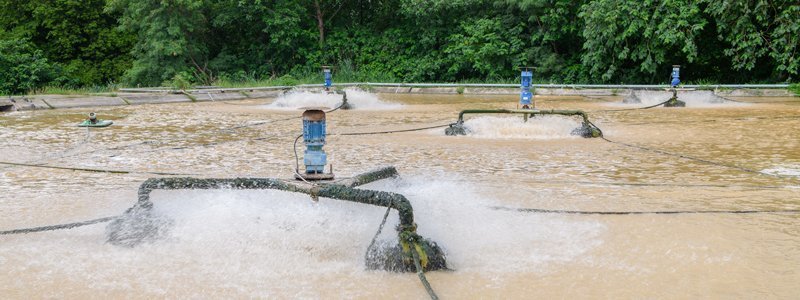
The amount of oxygen in the aeration tank of the activated sludge system theoretically is;
Microorganism activities
Oxidation of organic matter
The amount of oxygen required to keep the system at a certain dissolved oxygen concentration.
In cases where oxygen is insufficient for activated sludge, filamentous microorganisms will proliferate, leading to a decrease in sludge quality and sedimentation efficiency.
In practice, the dissolved oxygen concentration in aeration tanks should be maintained in the range of 1.5 - 4 mg/l. However, generally, a value of 2 mg/l is sufficient for this.
Considering such factors, it is seen that the efficiency of the activated sludges we use in aerobic biological treatment will be at maximum levels under suitable conditions. Operating wastewater treatment plants is very important in such cases. In uncontrolled systems, it is observed that the treatment efficiency decreases and the discharge water does not meet the standards based on criteria like this. Therefore, it is important to seek support from authorized personnel in the operation of your existing systems and to ensure that control is carried out regularly.