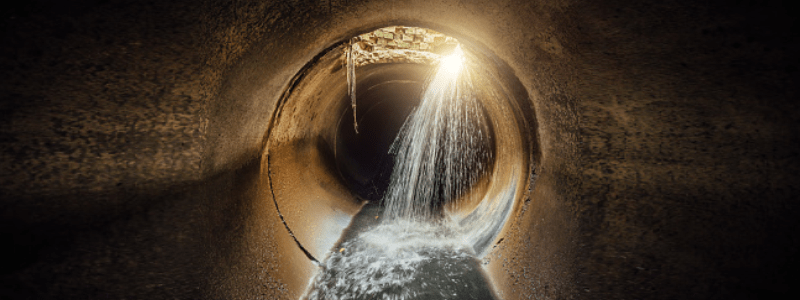
What is the biggest problem of our age? Is it that we are experiencing water scarcity despite having a planet that is almost 70% water, as a species that is constantly consuming while developing, or is it that we are still not aware of this?
What is the biggest problem of our age? Is it the fact that we are experiencing water scarcity despite having a planet that is almost 70% water, or is it that we are still not aware of this? The United Nations predicts that only 2.5% of the world's water reserves are freshwater sources and that within 25 years, two-thirds of the world's population will have to live in drought-stricken areas. It is an undeniable fact that our need for water increases with our growing population, but the biggest pain of this reality is the denial of what we are doing to meet that need. It is high time we made this a "matter." Yet, there are no limits to what we can do! Because, simply by cleaning parking lots with a broom instead of washing them with water, we can save water. This is exactly the "matter."**Human Water Cycle**In response to the increasing demand for water, the simplest solution that comes to mind is recovery and the renewal and increase of water sources, but since this is technically and economically limiting, various practical solutions that are suitable for sustainable development goals are needed. In this context, the recovery of treated wastewater and its use for agricultural irrigation has seen significant growth in recent years. By reusing wastewater, both the consumption of freshwater sources is reduced and the environmental impacts of discharged treated wastewater are minimized. At the same time, existing water resources are preserved, and a new source emerges to meet water needs: recovering our wastewater, in other words, creating a human water cycle.The areas for the reuse of our treated wastewater are quite broad. The reuse for agricultural irrigation, industry, aquifer recharge, toilet flushing, green area irrigation, etc., is becoming increasingly common worldwide. It is primarily used for land irrigation and replenishing groundwater. In some countries, the reuse of treated wastewater is...the recovery and reuse of wastewater has reached usage rates of 80%. Ensuring that the water quality criteria required for the intended use (Technical Procedures Regulation for Wastewater Treatment Plants) is met is of great importance in the reuse of treated wastewater.
For Reuse
We can explain the options for the reuse of wastewater under six headings: urban, industrial, agricultural, recreational, groundwater replenishment, and drinking water source. The use of reclaimed water in parks and golf courses, as well as in the toilets of business centers, is an example of urban uses; while its use in processes such as cooling, boiler feeding, and flue gas cleaning serves as an example of industrial uses. Of course, the most important aspect of this technology is that the technology chosen for the reuse of treated wastewater should be determined by considering the characteristics of the treated wastewater, quality criteria for reuse purposes, ease of operation, and economic feasibility. Otherwise, significant harm can be caused to public and environmental health.
There are many methods available for wastewater recovery, such as flotation, reverse osmosis, secondary treatment, filtration, ion exchange, etc., and through these methods, the removal of many harmful substances and organisms such as nitrogen, phosphorus, bacteria, protozoa, etc. from the waters can be achieved. Of course, the correct method is applied for the right purpose. For example, while classical activated sludge, filtration, and chlorination are preferred for agricultural irrigation, microfiltration is also necessary for recovering industrial cooling water. Since the source of each wastewater is different, the substances that need to be treated within it are also different, and in order to achieve successful treatment, the treatment must be carried out according to the characteristics of our wastewater.
What Are the Benefits to Us?
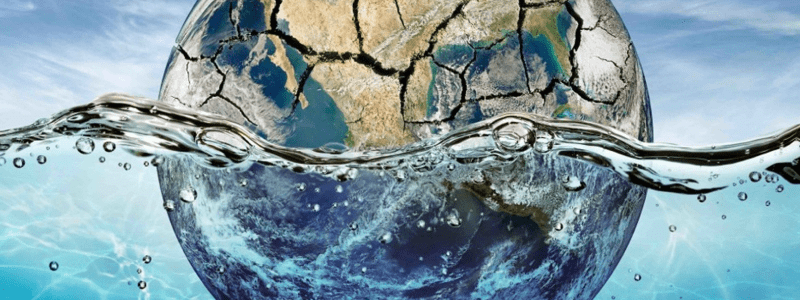
The increase in the recovery and reuse of wastewater provides many environmental and economic benefits, such as alleviating water scarcity, reducing pollution emissions, improving soil quality, and saving on production costs. By being used in feed and seed crops, it contributes to the agricultural economy.Aside from its contribution, using it for protection against icing and facilitating groundwater recharge is one of the great advantages of this system. However, the recovery and reuse of wastewater in Turkey is still in its initial stages. If projects for the recovery of groundwater and surface water wastewater are carried out based on a circular economy instead of a linear economy, we can achieve significant environmental development in our country, which is surrounded by water on three sides, and leave a more sustainable environmental legacy for future generations. And this is invaluable.