What are Treatment Chemicals?
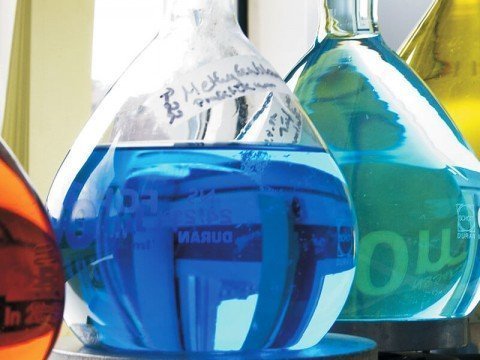
Wastewater Chemicals
The chemical substances used in treatment plants directly affect the efficiency of the treatment facilities, so it is extremely important to select the right chemicals and use them under appropriate conditions. Our company determines the correct chemicals to be used in treatment plants by conducting the necessary laboratory work for optimum dosages. It is crucial that the chemical to be used is reliable and certified to guarantee the results. For this reason, our company provides not only laboratory work but also chemical supply.
We can summarize the chemicals used in wastewater treatment plants as follows;
• Caustic: Provides coagulation formation and neutralization according to the pH level of the wastewater.
• Lime: A chemical that needs to be dissolved in water before being applied to wastewater. It is commonly used in neutralization and coagulation formation.
• PAC: Has a high absorption efficiency and is easily soluble in water. It is used as a coagulant.
• Ferric Chloride: An acidic coagulant.
• Aluminum Sulfate: Provides high-efficiency chemical treatment. It has acidic properties.
• Barium Chloride: Used for sulfate removal in wastewater. The amount to be used must be well determined; otherwise, it may have adverse effects on the treatment process.
• Sodium Meta Bisulfite: Affects the RH level in wastewater, facilitating the removal of the chromium parameter.
• Powdered Activated Carbon: Used for high COD efficiency.
• Hypochlorite: Generally used as a disinfectant after the treatment process is completed in biological wastewater treatment plants.
• Biological treatment system conditioner: Ensures the formation of an appropriate amount of bacteria in biological treatment systems, making the treatment process more efficient.
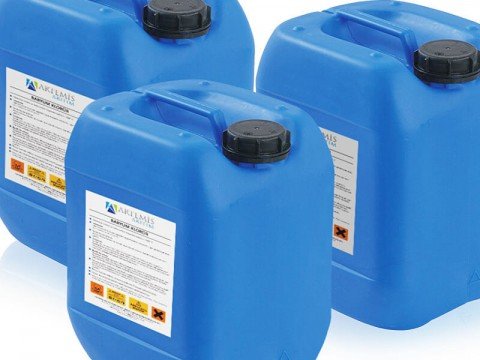 Clean Water Chemicals
We can summarize the chemicals used in clean water treatment plants as follows.
- Tablet Salt: Provides regeneration in water softening systems.
- Antiscalant: Prevents clogging of membranes used in Reverse Osmosis systems.
- Chlorine: Used as a disinfectant, especially in drinking water treatment plants.
What are Treatment Chemicals?
Different chemicals are used for the operation of water and wastewater treatment plants. These chemicals are evaluated for different purposes such as purification, cleaning, and maintenance of water. This process is a field that requires professional chemical knowledge and skills. The use of chemicals may have different percentage values depending on the type of operation and the characteristics of the facility. Water and wastewater treatment chemicals are a subject of study in their own right and require expertise in this area.
What is Wastewater Treatment?
Wastewater treatment is the process of making used water from domestic and industrial sources reusable without harming the environment. This process involves the removal of organic, inorganic, and biological substances, harmful microorganisms, toxins, and other pollutants from wastewater.
The wastewater treatment process primarily includes pre-treatment, physical processes, biological processes, and final treatment stages. Pre-treatment is used to remove large pollution loads from wastewater. Physical processes ensure the cleaning of water through chemical and physical methods. Biological processes allow microorganisms to break down organic matter in wastewater. Final treatment is used to remove other pollutants such as nitrogen and phosphorus from wastewater. The wastewater treatment process is extremely important for water resources and the environment. Treated wastewater can be reused.Irrigation can be used for industrial processes and even as drinking water.
What Are Treatment Chemicals?
Chemicals used in wastewater treatment plants serve different purposes. For example, coagulants are among the first of these chemicals. Those involved with wastewater often wonder, "What are coagulants?" These substances are chemicals used to precipitate suspended organic and inorganic materials in water. These substances are extremely important for preparing the treatment process by precipitating the particles that cause water turbidity and create a breeding ground for harmful microorganisms. In addition to these, the chemicals used in water treatment and their properties can be summarized as follows:
- Flocculants: These are chemicals used to complete the process of coagulants. Flocculants hold together the particles that have settled into a precipitate, forming larger, easily removable particles.
- Disinfectants: These are chemicals used to eliminate harmful microorganisms in wastewater. Chlorine, ozone, and ultraviolet rays are common methods used for the disinfection of wastewater.
- pH Adjusters: These are chemicals used to adjust the pH level of wastewater. Proper adjustment of the pH level ensures the success of other stages of wastewater treatment.
- Anti-foaming Agents: These are chemical agents used to prevent foaming during the treatment process.
- Nutrient Adjusters: These are chemicals used to adjust the levels of nitrogen and phosphorus in wastewater during biological treatment. These chemicals increase the efficiency of the treatment process by ensuring the proper growth of microorganisms. Wastewater treatment chemicals may vary depending on the type of facility and operational requirements. The correct use of wastewater treatment chemicals is extremely important for the efficiency of the treatment process and environmental protection.
Water Conditioning Chemicals
In addition to the water purification process, there is also a process that makes water suitable for use by altering its physical and chemical properties. This process, known as water conditioning, fundamentally involves the use of certain chemicals. For example, anti-scaling agents used in the water conditioning process are employed to prevent water hardness and scaling. These agents dissolve the minerals in the water, thus preventing scaling in the pipes and equipment within the system. Anti-scaling agents are chemicals used to balance the pH level of water and prevent the precipitation of minerals.
Corrosion inhibitors are another group of chemicals used in the water conditioning process. These chemicals are used to prevent corrosion that occurs when water comes into contact with metal surfaces. Corrosion inhibitors prevent corrosion by adjusting the pH level of the water and ensuring that metal surfaces are coated with a protective layer. Additionally, these chemicals can prevent corrosion by lowering the oxygen levels in the water.
Dispersants prevent the accumulation of insoluble particles and organic matter in water by dispersing and making them soluble. These chemicals enhance the efficiency of water systems by preventing blockages and failures. Dispersants ensure more effective use of water by reducing its hardness and preventing clogs.
Foam suppressants enhance the efficiency of the water system by preventing foam and bubbles that form on the surface of the water. These chemicals increase efficiency by regulating the flow of liquid in the water system and preventing pipe blockages. Foam suppressants are used in industrial systems, swimming pools, and water systems for domestic use.
pH adjusters ensure the effective operation of the system by adjusting the pH level of the water. These chemicals help equipment in the system last longer by balancing the acidic or basic properties of the water. pH adjusters are used in industrial processes and domestic use where the natural pH level of water changes.It is ideal for China. Water conditioning ensures more efficient and safe water use in industrial, commercial, and domestic water systems. The two processes are different from each other, but both are critically important for improving water quality and protecting our water resources.
The sustainable use of water resources requires the continuous implementation and development of wastewater treatment and water conditioning processes. You can also choose Artemis Treatment for professional support regarding the water purification process and chemical treatment systems; feel free to contact us for detailed information.