Sand Filtration and Activated Carbon Filtration Systems
Ultrafiltration Systems
Reverse Osmosis Systems
MBR Technology and Operating Principle
Industrial Wastewater Recovery Systems
Industrial Wastewater Treatment Plant
Waste Acceptance Facility
Recovery Facilities
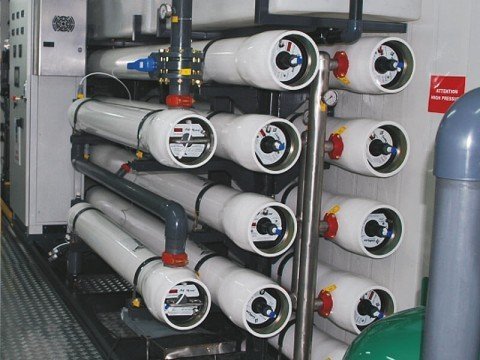
Wastewater and Water Recovery Facilities – Advanced Treatment Systems
Water resources are rapidly diminishing today. Alongside this, the increasing population and advancements in industry are increasing water usage. This both accelerates resource consumption and raises water usage costs.
In the coming years, the environmentally friendly approach, which will gain significant importance, as well as the facilitation of water usage and the reduction of costs, will make recovery quite important. With the development of technology, recovery facilities that have become easier and more accessible due to reduced costs are being successfully implemented by our company.
Water is one of the most essential natural resources necessary for all living beings to survive. Water is indispensable in every stage of life; in human use, in industries, in energy production, in the economy, in short, it is one of our essential needs in every field. However, water resources are rapidly depleting today. The increasing population and rapid developments in industry are increasing water usage. This both accelerates resource consumption and raises water usage costs.
The technologies to be used in the recovery of wastewater are directly proportional to the intended uses of the recovered water. If the recovered water is to be used for agricultural or irrigation purposes, a good disinfection system at the output of biological treatment will be sufficient, while more advanced treatment technologies (membrane technologies, activated carbon, and advanced oxidation methods, etc.) should be used for the recovery of heavily polluted industrial wastewater.
In the coming years, the environmentally friendly approach, which will gain significant importance, as well as the facilitation of water usage and the reduction of costs, will make recovery quite important. With the development of technology, recovery facilities that have become easier and more accessible due to reduced costs are being successfully implemented by our company.
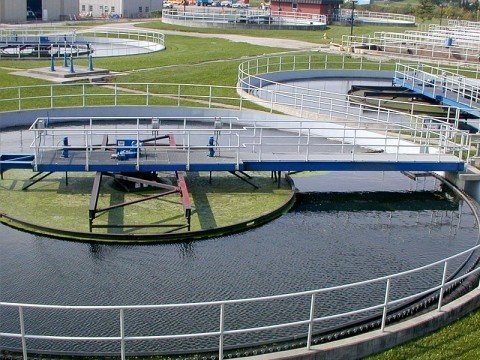 Sand Filtration and Activated Carbon Filtration Systems
Sand Filtration System
Sand filters are high-efficiency systems designed to remove insoluble particles of various sizes and suspended solids in water. Filtration systems are used to eliminate insoluble particles of various sizes and suspended solids in water. With the help of the material inside the filtration system, different sizes and densities of particles causing turbidity in wastewater are captured and removed from the water. When the sand filtration system is correctly selected and operated efficiently, it will reduce the load on subsequent treatment systems. This will provide ease of operation for the systems that follow, ensuring a longer lifespan for them.
Activated Carbon Filtration System
The raw material of granular activated carbon is usually very high-quality bituminous coal, anthracite coal, or coconut shell. Activated carbon filters are used for the treatment of unwanted chlorine, color, taste, odor-causing dissolved gases, residues, and organic substances in water. Activated carbon is a black material with a very large surface area. The efficiency of the filter is determined by the properties of the activated carbon used in the filter bed and the correct selection of the filtration rate of the water. In these systems, alongside the filtration mechanism, an absorption mechanism also operates during the treatment of water. For this reason, Activated Carbon Filters are systems that perform physicochemical treatment. The high surface area and adsorption capacity make activated carbon ideal for certain applications. One important consideration in activated carbon systems is that the mineral bed can create a suitable environment for bacterial growth. This is because activated carbon accumulates organic matter, and if there are bacteria in the water, they can use this organic matter as food to reproduce. In such cases, bacterial blooms can occur. Therefore, it is important to disinfect the water before and after the activated carbon treatment.
Ultrafiltration Systems
Ultrafiltration Systems
UF is a process used for the separation of various substances containing high molecular weight dissolved materials such as colloids, proteins, and carbohydrates. From an operational perspective, UF membranes are similar to microfiltration, with pore sizes ranging from 0.05 to 1 nm. UF membranes are supported by a substrate with a thickness of 50–250 µ, which has high permeability and selectivity. The main filtration process occurs in the upper layer. Although the operating pressure of UF membranes is lower than that of nanofiltration membranes (NF), it can reach up to 1-7 bar. UF is a filtration process that has been successfully used worldwide, replacing sedimentation tanks in active sludge processes in many industrial applications and urban wastewater treatment. This process is important in the recovery of hazardous waste and non-hazardous waste. Substances that can be retained by UF membranes include sugars, biomolecules, macromolecules, colloidal substances, polymers, dissolved and suspended solids, color compounds, and some viruses and bacteria. Low molecular weight solvents and salts can pass through UF membranes.
UF technology is used for the treatment and recovery of wastewater in the food, dairy, pharmaceutical, chemical, metallurgy, and leather industries, for advanced treatment of drinking water, as a pre-treatment before reverse osmosis (RO) and NF, for the recovery of sizing agents and indigo dyes in the textile industry, for the concentration of bleaching wastewater in the paper industry, for the concentration of oil emulsions in the metal industry, for sterile filtration in the dairy industry, and for recovery processes in electroplating baths in the automotive industry.
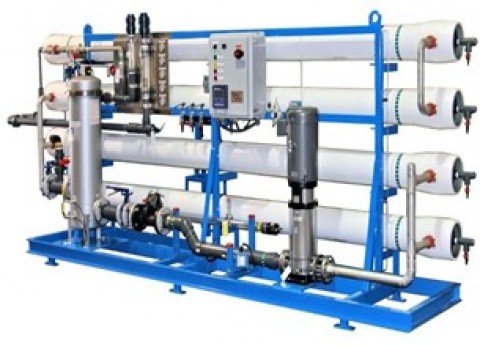 Reverse Osmosis Systems
Reverse osmosis membrane systems are a technology that has rapidly increased in use since the 1960s and is developed based on the principle of osmotic pressure.
The use of reverse osmosis has rapidly increased, especially in the fields of desalination and wastewater treatment. In this pressure-driven process, salts, hardness, pathogens, turbidity, disinfection by-products, pesticides, minerals, and organic substances, as well as very small molecules, color, sulfate, nitrate, sodium, and other ions contained in the denser liquid are retained. Osmotic pressure is the pressure applied to the concentrated side of the water to prevent the flow of water with a lower concentration, which is separated by a membrane. In the osmosis process, the liquid with lower density passes through a semi-permeable membrane to the side with higher density, diluting the denser liquid, and this process continues until equilibrium is reached at osmotic pressure. By applying a pressure higher than osmotic pressure, the movement of water from the more concentrated solution to the diluted solution side under high pressure is defined as "Reverse Osmosis" (RO).
The areas where RO technology is widely used include obtaining drinking water from seawater or saline water, concentrating wastewater from the food industry, producing process water, treating and recovering wastewater from metal, dairy, paper, and textile industries, and removing specific inorganics such as herbicides and pesticides for drinking water production, wastewater treatment, industrial water production, treatment of various industrial wastewaters, and desalination of seawater. Additionally, in wastewater treatment, it is used after the application of microfiltration as a pretreatment to remove dissolved compounds remaining in the water. High pressure is required to obtain deionized water. Like NF, RO is an important membrane process for obtaining high-quality reclaimed waters where trace organic pollutants, pharmaceuticals like antibiotics, are removed.
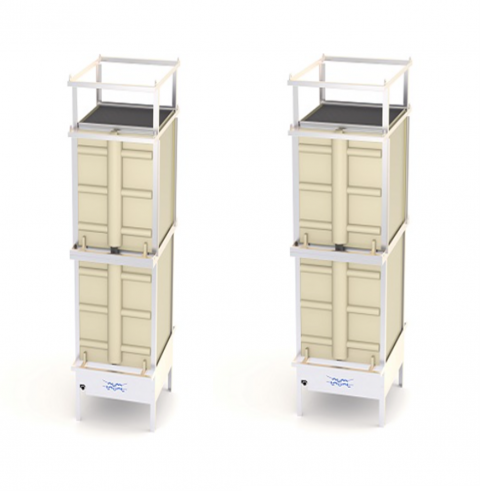
MBR Technology and Operating Principle
Membrane Bioreactor systems (MBR) are used for advanced treatment of domestic and industrial wastewaters.is a technology that provides purification efficiency in the list. The membrane unit eliminates the need for a conventional sedimentation tank and allows for high MLSS concentrations in a smaller area. By converting classical biological wastewater treatment plants into MBRs and canceling the final sedimentation basins, high-quality treated water is obtained, and it enables capacity increases for the facility. In the classical activated sludge process, biochemical oxidation and water/sludge separation occurring in aeration and sedimentation tanks take place in a single tank in MBR systems.
MBR systems are the combined use of the activated sludge process and membrane technology. One of the most significant advantages of membrane bioreactor systems is the ability to achieve high-quality treated water. Additionally, in MBR systems, it is known that the continuity of treated water quality is ensured due to the independence of the biomass-sludge separation process from sedimentation efficiency. Therefore, MBR systems attract attention, especially when considering the reuse of treated waters. The lower volume requirement of MBRs compared to conventional-classic activated sludge systems, their ability to operate in smaller volumes and at high sludge ages, and thus produce less biological sludge, are seen as advantages, especially for small-scale systems.
In the last twenty years, intensive studies have been conducted on MBR systems that enable the treatment of difficult-to-treat wastewater to meet discharge criteria and create recovery opportunities. MBR systems, which are a combination of the activated sludge process and membrane process, have significant advantages due to the membrane used in the system, which ensures that microorganisms remain entirely within the system. In conventional activated sludge systems, biochemical oxidation (in the aeration tank) and water/sludge separation (in the sedimentation tank) occur in two separate tanks, whereas in MBR systems, this takes place in a single tank. Within this tank, aeration...Active sludge is formed by aeration, and purified water is drawn through the very small pores of the submerged membrane cassettes or flat sheet membranes in the tank by applying vacuum, while the biomass that performs carbon removal through bio-oxidation remains inside the tank. Generally, microfiltration (approximately 0.2 µm pore size) or ultrafiltration (approximately 0.01 µm pore size) membrane units are used in MBR systems.
Industrial Wastewater Treatment Systems
Industrial wastewater treatment systems have become quite widespread in our country in recent years, as part of the regulations included in the EU accession process regarding the treatment of wastewater generated from industrial production activities. Therefore, every business that produces wastewater is obliged to treat its wastewater and meet the required limit values as per the regulations. In addition, due to the potential water scarcity that may occur in the near future and the need to leave a sustainable environment for future generations by protecting our natural resources, the issue of recovering wastewater from treatment plants and reusing it in different production areas has come to the forefront. The technology to be used in the recovery of wastewater varies according to the intended use of the recovered water. Industrial wastewater recovery systems involve advanced treatment methods such as MBR, ion exchange, reverse osmosis, advanced filtration, activated carbon filters, disinfection, electrodialysis, and oxidation methods for the wastewater generated as a result of production in the industry. Although the treatment of wastewater initially appears to be a mandatory expense item for all industrial establishments, the recovery of treated water emerges as a significant cost-saving item depending on the amount of water. The increasing amount of water used in industries leads to a serious rise in both the investment costs of treatment plants and the operating costs. Today, industrialists are adding various advanced treatment systems to existing treatment plants to reuse the water generated in their processes, thereby reducing their water costs.can provide savings.
In industry, reclaimed water can be used in processes such as cooling towers, ash irrigation, dilution of radioactive waste, flue gas washing, metal factories, and boilers.
What Are the Advantages of Industrial Wastewater Recovery?
- It becomes a sustainable water source and is a reliable water source with necessary controls.
- It leads to a reduction in energy consumption.
- It ensures minimal consumption of clean water sources.
- It reduces the deterioration of surface water quality.
- It provides a decrease in water supply costs.
Industrial Wastewater Treatment Plant
Waste Acceptance Facility
Recovery Facilities
Recovery facilities designed to make waste reusable help conserve natural resources and prevent waste from harming the environment. Additionally, recovery facilities are important for waste management, as the storage and disposal of waste are costly and harmful to the environment. One of the technologies used in recovery facilities is wastewater recycling systems. These systems promote the efficient use of water in areas where water resources are limited.
Waste Recovery or Disposal Facilities
Waste recovery helps in the proper management of waste, prevents environmental pollution, and contributes to the preservation of air, water, and soil quality, which are important for the environment. The effective operation of waste recovery facilities is vital for the protection of the environment and the provision of a sustainable future. Waste recovery and disposal facilities not only convert waste into reusable materials but also ensure that these materials are used in the production of new products.
It can be used in production. These facilities ensure the disposal of waste using special filters and procedures, minimizing their harm to the environment. ### What are the Wastewater Recovery Methods? Wastewater recovery is the process of obtaining water that can be reused after wastewater treatment. Wastewater recovery methods support the reuse of water and the sustainable management of water resources. Some wastewater recovery methods are as follows: - **Biological Treatment:** A method that cleans wastewater with the help of microorganisms. Biological treatment is used to remove organic matter, nitrogen, phosphorus, and other pollutants from wastewater. Additionally, the recovery of the treatment sludge formed after biological treatment is also possible. - **Advanced Treatment:** Advanced treatment is a method typically used after the biological treatment process. This process further purifies water using technologies such as ozonation and UV rays. - **Reverse Osmosis:** Reverse osmosis is a method in which wastewater is purified by passing it through a membrane under pressure. This method removes organic matter, salts, and other pollutants from water. - **Membrane Filtration:** Membrane filtration is a method used to filter pollutants by passing water through a membrane. This method includes different filtration technologies such as microfiltration, ultrafiltration, and nanofiltration. - **Adsorption:** Adsorption is the process of water adhering to a material that holds pollutants. This method can be applied using carbon filters or other adsorption materials. ### What is Reverse Osmosis? The reverse osmosis method is based on the principle of purifying wastewater by passing it through a membrane under pressure. Reverse osmosis membranes allow only water molecules to pass while filtering out the pollutants in the water. Reverse osmosis devices are used more in homes and small-scale businesses. While reverse osmosis water treatment is an effective method for treating wastewater, this process is quite slow and requires a large amount of energy. Additionally, the membranes of reverse osmosis water treatment devices need to be regularly maintained.
It can be costly due to the need for monitoring and maintenance.
What is Ultrafiltration?
Ultrafiltration is a membrane filtration technique commonly used in recovery facilities. This technique is used to separate certain sized substances from liquids, such as particles, bacteria, and other small molecules. The filter membrane used in the ultrafiltration method has very small pores that allow the liquid to pass through, while preventing the passage of waste materials, particles, and microorganisms. It is effective in removing substances such as organic matter, suspended solids, bacteria, and viruses from various wastewater and industrial liquid streams. It is frequently used in recovery facilities because it provides a finer separation capability compared to other filtration techniques. One of the important components used in the ultrafiltration process is ultrafiltration membranes. The membrane characteristics of the ultrafiltration device are important factors that determine the performance and efficiency of the device.
What is a Membrane Bioreactor?
A membrane bioreactor (MBR) is a technology used in both biological treatment processes and industrial production processes. Membrane bioreactors allow for higher quality treatment compared to classical biological treatment processes by using membrane filters within the bioreactor. It operates by using membrane filters within a bioreactor. These filters perform a separation process between the liquid phase and the settled solids during biological processes. Thus, the biological material within the bioreactor is treated more efficiently and recovered through the membrane filters.
The design of a membrane bioreactor is formed by combining bioreactor and membrane filtration technologies. It can vary depending on the application purpose, process parameters, material selection, and the type of membrane filters to be used. However, in general, an MBR design consists of components such as a bioreactor, membrane filters, pumps and circulation systems, aeration systems, control and monitoring systems, and cleaning of the membrane filters.
What is Industrial Wastewater?
Industrial wastewater is the water effluents that are generated as a result of industrial activities and contain various pollutants. Industrial wastewater can occur in many sectors (petrochemical, food, textile, metal processing, pharmaceuticals, electronics, etc.) and businesses. These wastewaters can contain various pollutants such as organic and inorganic chemicals, heavy metals, toxic substances, acids and alkalis, oils and greasy substances, and solid particles.
What Are the Methods of Industrial Wastewater Treatment?
The complex systems that include various technologies used to treat wastewater generated from industrial activities and make it reusable are called industrial wastewater treatment systems. Some common methods used for the treatment of industrial wastewater include physical treatment, chemical treatment, biological treatment, and membrane treatment. The treatment of industrial wastewater can be costly depending on the pollution of the water, the type of substance causing the pollution, and the treatment of this substance in accordance with environmental regulations. For example, the cost of a waste oil recycling facility is quite high. Artemis Treatment, which has signed many active and successful projects with engineers and expert consultants with international knowledge and experience, offers recovery systems tailored to your needs with professional and effective management systems. You can contact us for detailed information.