Exxon Valdez Tanker Accident Dear readers, in this article, I would like to talk to you about the Exxon Valdez tanker disaster, which ranks second in the maritime industry after the Deepwater Horizon accident. Since this article will be a bit long, please prepare your tea or coffee.
.jpg)
Undoubtedly, the mistakes we make affect nature and natural life. While some of these mistakes impact nature indirectly, in some cases they lead to the instantaneous extinction of thousands of species and irreversible damage.
Oil spills have long been one of the biggest concerns in the maritime industry. Spills resulting from drilling rigs, tankers, and normal ship collisions cause our seas and oceans to be polluted with oil-based light liquid hydrocarbons, inflicting damage on the environment that lasts for decades. These are seen as both commercial and environmental disasters.
Oil has dominated our lives directly or indirectly. From the products we use to transportation and energy, it has a significant presence, and its economic value is undeniable. When combined with the fact that 90% of world trade is transported via sea routes, undesirable scenarios can emerge.
At that time, the Exxon Valdez tanker, operated by Exxon Shipping Company, was a 21-member crew vessel with a capacity of 235,000 cubic meters and a length of 301 meters. In March 1989, it departed from the Valdez Terminal, the southern end of the Trans Alaska Pipeline, loaded with approximately 205 million liters of oil, heading to Long Beach, California. This would mark the beginning of one of the world's largest disasters. Shortly after its departure, the tanker collided with the Bligh Reef in Alaska's Prince William Sound region, tearing open the hull of the tanker. Approximately 40 million liters of oil spilled into the sea. Although reported as 40 million liters, the actual spill is estimated to be close to 120 million liters.
Causes of the Accident
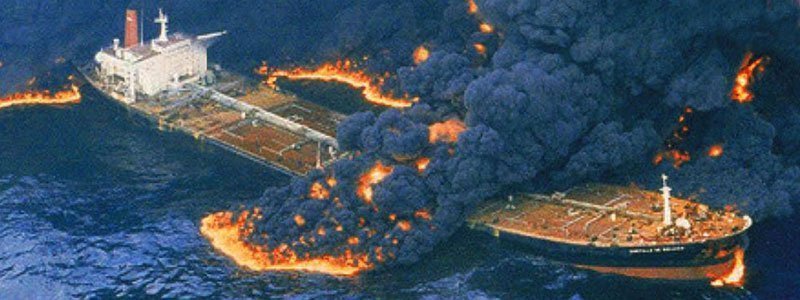
When the reports investigating the causes of the Exxon Valdez accident were examined, it was understood that multiple factors contributed to the incident. At the time of the accident, the ship's captain, Joseph Hazelwood, was not at the helm despite known hazards on the route. He had transferred his duties to the 3rd Captain and had withdrawn to rest.
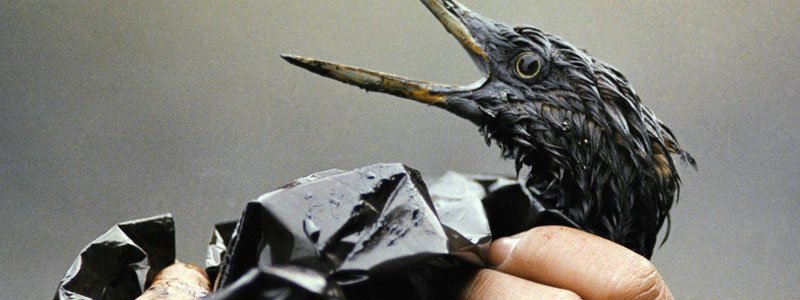
Before taking a break, the 3rd Captain has created the route to avoid the rocks. However, the 3rd Captain, who has not had the opportunity to rest due to the stacked tasks, is also insufficient in experience for the navigation and management of the ship. When all these factors come together, the 3rd Captain was unable to execute the maneuver to avoid the rocks, and an unavoidable collision occurred. The sole mistake is not just that of the 3rd Captain. One of the reasons for deviating from the route is the faulty radar. Investigations revealed that the radar had broken down a year before the accident and had not been repaired during that time.Investigations also revealed that Exxon Shipping Company did not provide the necessary ice observation equipment that should have been taken on board. Additionally, it was found that the ship followed a route that should not have been used under normal conditions.As a result of the lawsuits, Captain Hazelwood was fined $50,000 for negligence and dereliction of duty, as well as for being intoxicated during navigation, and was sentenced to 1,000 hours of community service.**Effects of the Spill**Due to the collision, approximately 41 million liters of oil spilled into the sea from 8 of the 11 tanks of the ruptured tanker. Although it occurred along a rocky, discontinuous coastline, the effects and spread of the accident reached massive proportions. There was a significant delay in emergency intervention, and the inadequacy in this regard was clearly evident. Since no precautions were taken for a long time, the spread of the oil layer reached high dimensions and became uncontrollable. Approximately 2,100 km of coastline was polluted.The spread of the oil layer has threatened many living beings within the ecosystem. Cold climate species have faced this problem, which threatens their lives due to human error, while battling the increasing temperatures caused by climate change.Seabirds have died by being coated in oil, becoming trapped on the water's surface, and drowning instantly. This accident has reportedly claimed the lives of 250,000 seabirds, 2,800 otters, 300 seals, 250 bald eagles, and 22 killer whales (orcas). In addition, countless salmon and herring fish have also perished.; has opened the way to its demise.
Immediately after the incident, the hunting of marine creatures such as salmon, crab, herring, rockfish, and shrimp was halted. The fishing ban in commercial fishing continued throughout 1990. While this affected many people living in the region financially, its indirect effects were also observed in the fishing industry.
The health effects of the accident were not only seen in aquatic life but also affected the people living in the towns neighboring Prince William Sound.
The short-term effects were undoubtedly immediately visible in the fishing industry, which is a source of livelihood. The financial loss for the fishing industry that year was between 570-580 million US dollars. Additionally, the accident hindered tourism, which had reached its lowest levels in the year following the incident, significantly impacting the regional economy. While it affected the jobs of 25,000 people who earn income from tourism, it caused a loss of 2.5 billion US dollars in tourism.
Despite the years that have passed, the region has not fully recovered even today. A large portion of the Alaskan coast remains polluted with oil leaking from the Exxon Valdez. The fishing industry has still not fully recovered. The accident also brought about families that were dispersed due to economic reasons and increased alcoholism.
Cleanup Phase
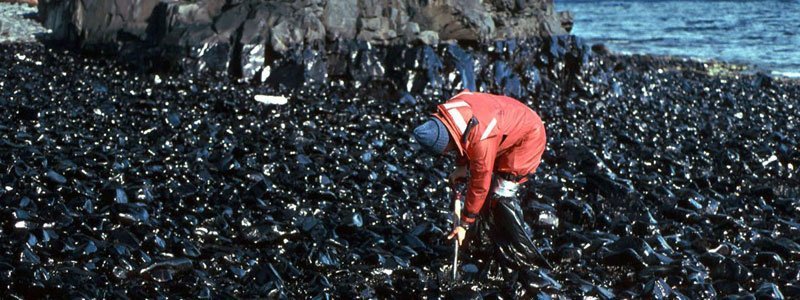
Although the spill happened on March 24, it took until May for the oil to reach some Alaskan beaches. There, the cleanup lasted long into the summer of 1989—and resumed in the summer of 1990. Photo by ARLIS/Alamy Stock Photo
The cleanup operations were largely successful. In achieving this success, the support of not only the American Government but also Exxon Mobil in the operations played an important role.
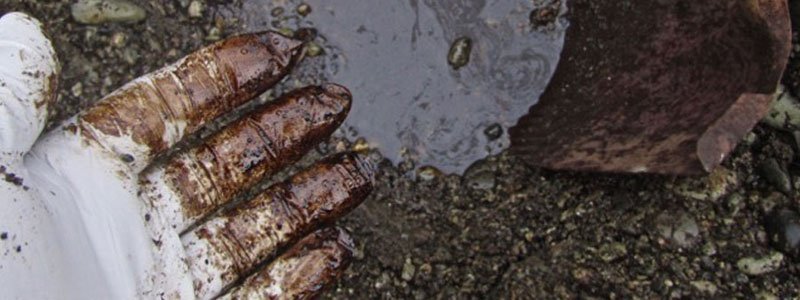
Over 11,000 personnel, 58 aircraft, and more than 1,400 ships participated in the operations. The operations included difficult and complex procedures, such as relocating some marine creatures to different areas to ensure their safety until the cleanup was completed. Between 1989 and 1992, threeOperations that lasted throughout the year are still being monitored today for effects that may arise later. According to reports, the company spent approximately 4 billion American dollars on cleanup operations and has compensated over 10,000 fishermen and others who suffered damages. In 1994, Exxon was fined 5 billion American dollars by the Alaska Court, and the U.S. Supreme Court reduced this fine to 508 million American dollars.Digging into the beach at certain sites around Prince William Sound, it doesn’t take long before you strike oil. This photo was taken on Eleanor Island on July 26, 2018. Photo courtesy of David Janka/auklet.comDuring the cleanup phase, burning, mechanical cleaning, and chemical agents were used. Since the pollution affecting different depths of the ocean was in very large quantities, a significant portion of it could not be cleaned up. While a large part of the surface layer was cleaned, the sub-surface layer remained in the ocean and continued to affect marine life for a longer period. It may even be more accurate to say it continues to do so, as it is believed that despite the cleanup, the sub-surface oil layer has contaminated 81,000 square meters of the Alaskan coastline.Although the intervention and cleanup processes, albeit late, have undoubtedly reduced the effects of the accident, the impacts will continue to be seen in the future as they were in the past. As a result of this accident, many deficiencies were observed, and a number of regulations have been updated by the maritime industry.In my future writings, I will try to share with you, as much as I can, the processes of cleaning up oil spills and leaks in the seas, as well as national and international regulations.