According to the "Workplace Hazard Classification Regulation" published by the Ministry of Labor and Social Security regarding Occupational Health and Safety, wastewater treatment plants are classified as very hazardous. Therefore, treatment plants harbor many risks. These risks include exposure to chemical substances (solid-gas-liquid), falls, infectious diseases, and disorders of the respiratory, digestive, and nervous systems.
The mechanical hazards encountered in wastewater treatment plants occur during the maintenance and repair of machinery and equipment, as well as during troubleshooting. According to the 2010 data from the European Agency for Safety and Health at Work (EU-OSHA), 10-15% of all fatal workplace accidents and 15-20% of all workplace accidents are related to maintenance work.
The Importance of Risk Assessment
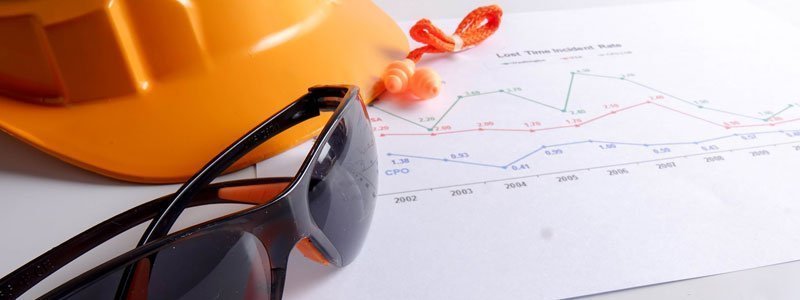
Workplace accidents in wastewater treatment plants largely occur during maintenance, equipment inspection, troubleshooting, and cleaning operations. To prevent these accidents, a risk assessment must be conducted alongside the commissioning of treatment plants. The risk assessment process clearly identifies the risks that may arise in treatment plants. Using the Fine Kinney method as a method for risk assessment will be more beneficial, as treatment plants contain multiple risk groups.
As a result of the risk assessment, chemical and physical risks are identified, and through measurements and analyses, levels of chemical and physical exposure are determined, leading to proposed solutions aimed at minimizing risks. The results of the measurements and analyses are presented using tables and graphs for comparison. In very hazardous classes, risk assessments are renewed every two years according to the Occupational Health and Safety Risk Assessment Regulation, and regularly improved items in the risk assessment are enhanced.
Along with the risk assessment, the facility should be equipped with warning signs, and the use of personal protective equipment must be ensured. Personal Protective Equipment should be selected according to the nature of the work in accordance with the Regulation on the Use of Personal Protective Equipment in Workplaces. Personal protective equipment available on the market that does not fully perform its function will have no benefit.
Common Workplace Accidents in Treatment Plants and Prevention Methods

Additionally, recently, most workplace accidents in treatment plants involve toxic gases such as Hydrogen Sulfide and Methane., It originates from Carbon Dioxide and Carbon Monoxide. These gases can accumulate in treatment facilities and can lead to deaths in a short time. Therefore, during the cleaning or maintenance of treatment tanks such as balancing pools, it should be ensured that these types of toxic gases are removed from the environment by measuring with special gas detectors. During maintenance, all personnel should work with special breathing apparatus, and their activities should be monitored by a separate team independent of the maintenance environment.In the treatment facility, personal protective equipment must be used completely. As you know, treatment facilities can be installed in narrow and restricted areas due to insufficient space. In this case, when using low platforms, the corners and sharp edges of the platform must be surrounded by soft protective panels, and hard hats must be worn within the facility. Additionally, even while moving inside the facility, safety glasses should be worn to protect against the possibility of pressurized wastewater or chemical spills from unnoticed cracked lines. The surrounding of the glasses with protective material will prevent chemicals from entering through the openings of the glasses.
To Eliminate Risks at Zero Cost, Design of the Treatment Facility Should Begin
When all these points are taken into consideration, the most important thing that needs to be done is to ensure that the design of the treatment facility is done properly. Especially platforms and stairs, passageways, and chemical storage routes should be planned in advance. Treatment facilities designed without considering occupational health and safety (OHS) risks and the human factor may still fall short in some areas despite all precautions being taken later.It is necessary to determine and implement what needs to be done during the design and operation of treatment facilities. In our country’s conditions, the misunderstanding of OHS and its remaining only in documentation leads to workplace accidents.
In Conclusion, Training is Essential
In our country, the importance of new measures is beginning to be recognized.It is a fact that it is beneficial to receive support from expert teams in these issues, which are attempted to be addressed together with environmental and occupational health and safety (OHS) topics. Since it encompasses many complex subjects such as chemistry, biology, electricity, technology, and engineering, the operation and maintenance of treatment plants is a field that requires its own unique expertise.As Artemis Treatment, we organize Wastewater Treatment Plant Operator training sessions at regular intervals, covering detailed topics such as the operation, maintenance, and management of wastewater treatment plants, discharge permits, and processes, in order to raise awareness among both managerial and technical staff, thus supporting the development of our industry in this area.

