Hazardous Chemical SubstanceWho is Responsible for the Transportation of Hazardous Materials?
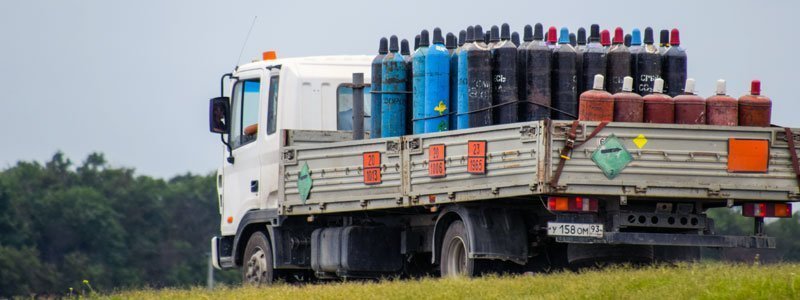
In the transportation of hazardous materials, companies that produce, store, label, package, transport, and purchase the chemicals are held responsible. Therefore, not only the companies that sell hazardous chemicals but also those that purchase them are subject to legal action. For this reason, companies making purchases need to ensure that they have thoroughly questioned everything from the packaging of their suppliers to the responsibilities of the transportation vehicles before acquiring their products.
How Should the Packaging of Hazardous Chemicals Be?
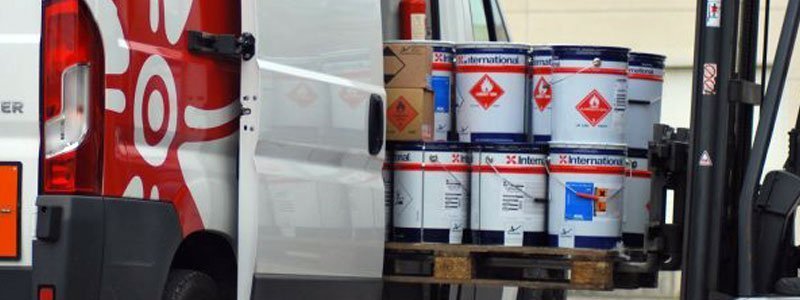
Hazardous chemicals are generally sold in drums, barrels, or IBCs. Their packaging is specifically produced according to the chemicals they contain. The packaging we need is determined based on the UN number of the chemical we will contain. Many suppliers in the market sell special UN-numbered drums, barrels, or IBCs.
Additionally, there must be a label on the packaging. This label should include information such as the name of the chemical, UN number, hazard markings, production date, and expiration date.
Those who want detailed information about the standards for labeling and markings can refer to the standard numbered 43031 published by TSE.
Characteristics of Vehicles Carrying Hazardous Chemicals and Materials and Documents Required to be Present in the Vehicle
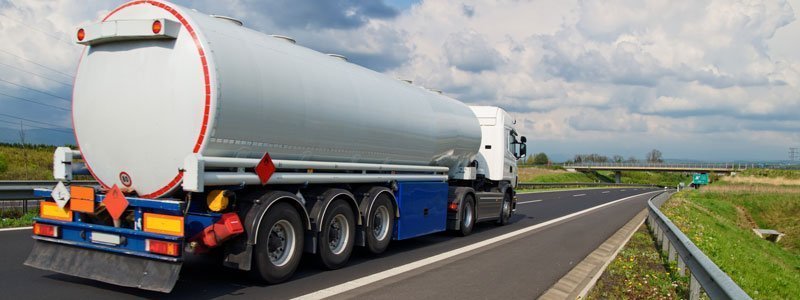
The materials and equipment that must be present in the vehicle that will carry the goods can be listed as follows;
The vehicle's floor must be covered with a leak-proof pallet.
There must be empty orange signs at the front and back of the vehicle. When the vehicle is transporting chemicals, this sign should be in the open position; when it is not transporting chemicals, it should be in the closed position (folded position).
An ADR kit must be present in the vehicle. This kit includes absorbent pads, etc. It should be kept as a precaution in case of any chemical leakage.
Depending on the size of the vehicle, ABC powder fire extinguishers must be present.
The vehicle must have an eye wash station.must be present.
During transportation, a special delivery form containing the details of the chemical must be kept in the vehicle along with the organized delivery note belonging to the company to which the chemical will be delivered.
An accident report form must be kept in the vehicle.
Mandatory Financial Liability Insurance Policy for Hazardous Materials and Hazardous Waste.
Valid ADR Compliance Certificate for vehicles (not required for packaged transport).
Written instructions containing detailed information about chemical transportation must be in the vehicle.
The MSDS of the chemicals to be transported must be in the vehicle.
For each vehicle, at least one chock of appropriate size suitable for the wheel diameter and the maximum mass of the vehicle.
Two erectable warning signs.
One emergency mask for each member of the vehicle crew.
A shovel (only required for solids and liquids with hazard label numbers 3, 4.1, 4.3, 8, or 9).
A sewer cover (only required for solids and liquids with hazard label numbers 3, 4.1, 4.3, 8, or 9).
A collection container (only required for solids and liquids with hazard label numbers 3, 4.1, 4.3, 8, or 9).
For each member of the vehicle crew;
A warning vest (as stated in EN 471:2003 + A1:2007 standard).
Portable lighting devices in accordance with the provisions of 8.3.4.
A pair of protective gloves and
Eye protection equipment (e.g., safety glasses).
All the precautions mentioned above also apply to purification chemicals.
Characteristics Required for the Driver of a Vehicle Carrying Hazardous Chemicals
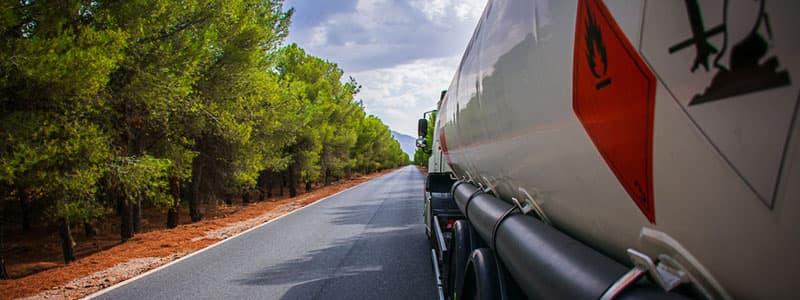
The driver must have an SRC 5 certificate. This certificate can be obtained by participating in training provided by private organizations and passing an exam conducted by the government.
The driver must receive first aid training and fire training. They must have obtained their certificates in this regard.
Other Issues to Consider in Hazardous Chemical Transportation
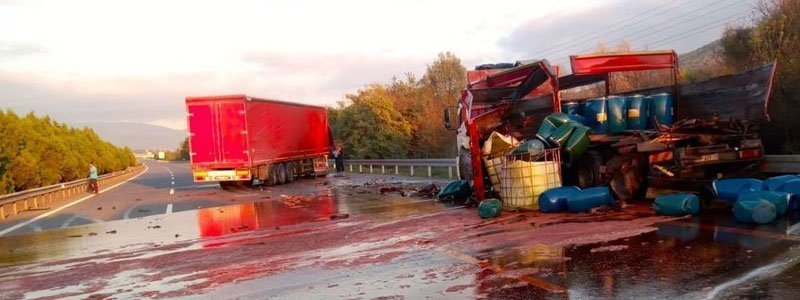
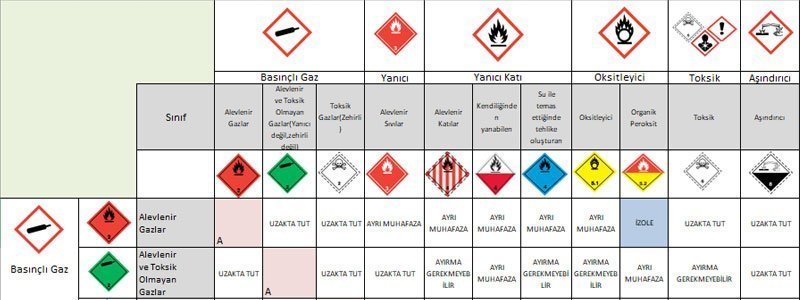
If there are multiple types of chemicals inside the vehicleIf chemicals are to be found, they must be stored in accordance with the chemical loading and storage matrix. In this way, risks that could cause corrosion, fire, or explosion in case of contact with each other are eliminated.
If chemical transportation is taking place inside the vehicle, no passenger should be accepted.
If there is chemical transportation inside the vehicle, smoking is strictly prohibited.
During the loading and unloading of chemicals, the processes involving chemicals must be monitored by authorized personnel only.
The vehicle's parking brake must be engaged during the filling or emptying of chemicals.
It is prohibited for vehicles loaded with chemicals to pass through tunnels and the 1st and 2nd bridges in Istanbul. Vehicles loaded with chemicals can only pass through the Yavuz Sultan Selim Bridge in a convoy for a fee.
**In Conclusion** To prevent accidents and potential environmental disasters that may arise during the transportation of hazardous chemicals in our country, it is necessary to review all legal regulations and implement the required practices through detailed analysis. We would be pleased to provide necessary information and guidance if you contact us regarding any points you feel are lacking or areas you wish to improve in hazardous material chemical transportation. Let us not forget; we are each a link in the chain, and the strength of the chain is only as strong as its weakest link.