Maritime Sanctions Throughout history, many accidents have occurred in the maritime industry, many of which have seriously affected the natural environment, economy, and human health in the regions where they occurred. Following these accidents, deficiencies in the contracts, laws, and determining factors in force worldwide have been observed. It has been determined that there are significant gaps in many areas.
Today, the internationally recognized and implemented convention in the Maritime Industry is known by its abbreviation "MARPOL," which stands for the International Convention for the Prevention of Pollution from Ships. It emerged from the combination of two different regulations published by the International Maritime Organization (IMO) in 1973 and 1978.
Its history dates back to the 1954 congress titled "OILPOL," which was the first organized effort to prevent marine pollution from oil sources. However, its primary emergence was due to the accident in 1967, when the oil tanker Torrey Canyon spilled 120,000 tons of oil at the transit point known as the English Channel, located to the south of the United Kingdom. Although the agreement that came into force in 1973 addressed pollution from oil, chemicals, and packaged hazardous materials, it was revised in 1978 due to tanker accidents that occurred between 1973 and 1978, and it received its final name, Marpol 73/78. This regulation, which has undergone many revisions to date, contains 6 Annexes. Annex I was first implemented in 1983, and the other annexes followed gradually.
Special Areas
In addition to these 6 Annexes, Marpol also includes regulations regarding the construction and design of ships. Furthermore, with a regulation called Special Areas, it has identified regions that are already damaged and have sensitive ecosystems, prohibiting all types of discharges in these areas. Two of these areas are the Mediterranean and the Black Sea, located on either side of our country. They were recognized as special areas on November 2, 1973, and legal obligations were established on October 2, 1983. In the regions designated as special areas, even the use of incinerators for waste disposal on ships is prohibited.
Prohibition of Waste Discharge from Ships into the Sea
In our country, along with these regulations, Law No. 5312 titled "MARINE POLLUTION PREVENTION" has been enacted.
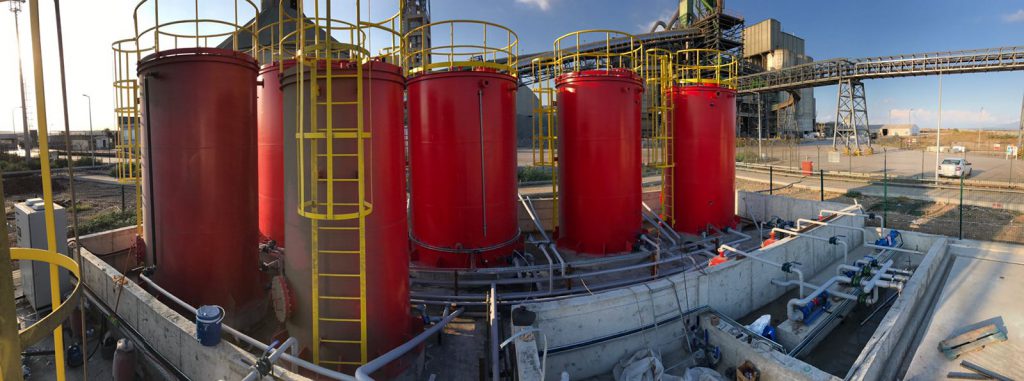
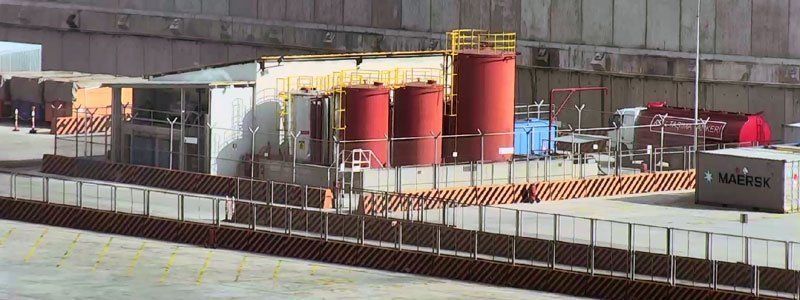
"Law on Intervention in Emergencies and Compensation for Damages Due to Pollution of the Environment with Oil and Other Harmful Substances" and "Environmental Law No. 2872" prohibit the discharge of operational waste from ships into the seas, which includes sludge, bilge water, slop, dirty ballast, all kinds of solid waste, and other potential wastes (such as cargo residues, etc.). The penalties to be applied in case of discharge of these wastes or accidental spillage are specified under Article 20 of Section 5 of the Environmental Law No. 2872. In addition to these penalties, according to Law No. 5312, the responsible parties are jointly liable for the costs of cleaning, costs related to protective measures, damages to living resources and marine life, restoration of the damaged environment, costs for the transportation and disposal of collected wastes, damages occurring in natural and living resources used for livelihood, damages to private properties, damages arising from personal injuries and deaths, loss of income, damages to income and profit capacities, and other public damages.**Obligation to Establish and Operate Waste Reception Facilities**Taking all of this into account, it has become essential for coastal facilities to establish and operate Waste Reception Facilities. This necessity is also emphasized by Marpol. In our country, the framework for these services has been determined in accordance with the "Regulation on the Reception of Waste from Ships and Control of Wastes." In brief, ships arriving in Turkish territorial waters are required to notify the relevant coastal facility at least 24 hours in advance via GATS (Ship Waste Tracking System) if they will be discharging waste; this obligation must be fulfilled as soon as they depart from the point of departure for short voyages. Each ship, whether it discharges waste or not, is required to pay a fixed fee at the first port of call in Turkish territorial waters, with the aim of contributing to the sustainability of Waste Reception Facilities. Based on this fixed fee, ships are charged according to their volume.They can dispose of waste within the specified amounts as per their requests. If these amounts are exceeded, they are required to pay the extra fees determined according to the types of waste.
If a ship that has paid a fixed fee at a previous port wishes to dispose of waste at another port, or if it leaves Turkish territorial waters for an overseas voyage and returns within 48 hours wishing to dispose of waste, it will only pay according to the fee schedule determined per the amount of waste it will dispose of.
Unfortunately, due to the human factor involved, accidents that occur in situations where costs are avoided cause more environmental damage than the discharge of operational waste. A close and simple example is the accident of the ship named Lady Tuna, which ran aground in Çeşme.
In summary
To sum up, just like in every field, waste management plays an important role in achieving a sustainable world in the maritime industry. Thanks to advancing technology, tracking has become easier, resulting in stricter measures. Education, increasing personal awareness, conveying the harm of potential outcomes to people, and significantly increasing penalties are essential for making progress in this area.