Sinkholes are a phenomenon that has reached gigantic sizes all over the world and piques our curiosity. These depressions, formed naturally at meters deep underground, clearly demonstrate the extent of the effects of global warming that we have been experiencing recently.
In this article, we will discuss how sinkholes are formed, how many there are in various sizes in Turkey and around the world.
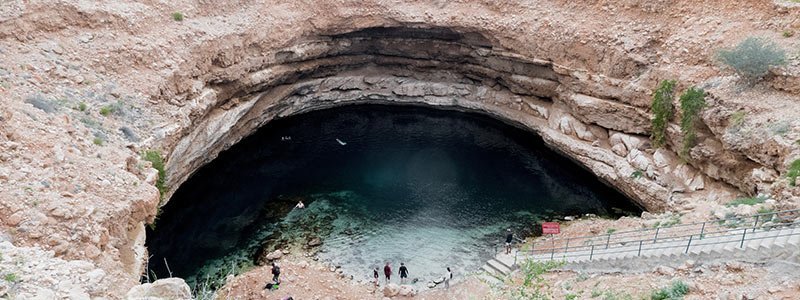
The combination of underground water with carbon dioxide results in carbonic acid, which gradually dissolves limestone-rich soils, leading to the formation of caves underground. The deep depressions formed by the collapse of the soil above the cave are called sinkholes.
The main reasons for the formation of sinkholes often include the withdrawal of underground water and increased movements of underground water. The primary culprit in the formation of sinkholes is the soluble formation known as groundwater. The waters moving within this unit erode this formation, leading to the creation of sinkholes.
Since the early 1980s, there has been a significant decrease in underground water levels. In the past, sinkholes were not perceived as a threat due to low population density, a limited number of agricultural lands, and industrial activities, but now they have become a potential danger to human life due to the increase in these activities.
How Many Sinkholes Are There in Our Country and the World?
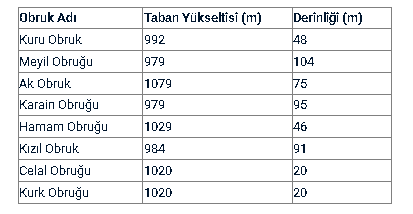
The area where sinkholes are most commonly seen in our country is the Konya Basin. There are more than 20 sinkholes here. The most famous of these is the Kızören sinkhole, which is 300 m wide and 145 m deep. After the Konya Basin, another area where sinkholes are prevalent is the Çimiköy plateau in Antalya. Here, 22 sinkholes have been identified. Mucur Sinkhole, Heaven and Hell Sinkholes are among our other sinkholes.
The Chamber of Geological Engineers stated that until 2017, 300 sinkholes occurred in the Karapınar region of Konya, 9 in 2018, and 11 in 2019. The reason for this is attributed to the cultivation of water-intensive crops such as corn and alfalfa in the region and the low rainfall in this area. In Karapınar, which has a population of about 50,000, the sinkholes formed by the withdrawal of underground waters and the collapse of the soil pose a serious threat to the local population.
Sinkholes in Turkey
Sinkholes in the World
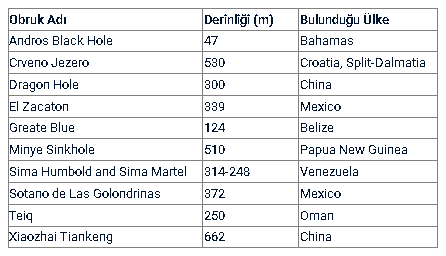
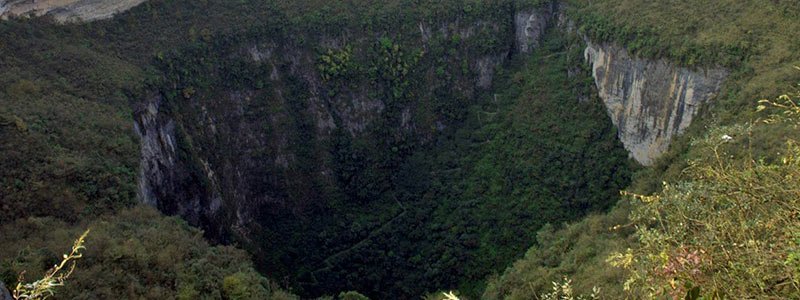
The world's deepest sinkhole Xiaozhai Tiankeng
Xiaozhai Tiankeng is the largest sinkhole in the world. The local people have known about this sinkhole since ancient times. To facilitate tourism, a staircase with 2800 steps has been built for tourists visiting this sinkhole.
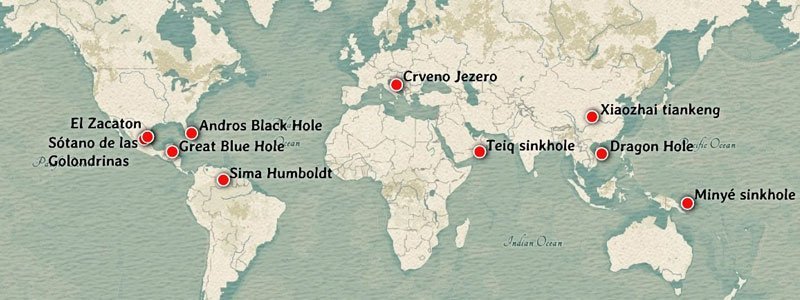
The locations of the world's most famous sinkholes
Reasons for the Increase in Sinkholes, Their Effects on Human Life, and Necessary Precautions
Among the most important causes of sinkholes in our country is the extraction of groundwater for human use. In the Konya closed basin, there are approximately 140,000 groundwater production wells, with 100,000 undocumented and 40,000 documented. Although there is no precise data on how much water these wells consume, the situation becomes serious in Konya, where the average rainfall is low and irrigated agriculture is practiced. In addition to natural geological factors, when we add human factors, there is both low rainfall and excessive water consumption. Therefore, we are gradually lowering the groundwater level. If we calculate an average decrease of about 1.5 meters annually over the last 30-40 years, there is a reduction of about 50-60 meters in water level. This situation brings sinkholes that formed in mountainous areas in the past closer to residential and agricultural areas today.
In 2015, a 15-meter deep sinkhole formed for the first time around Inandık Village in Çankırı. In the following years, upon the formation of many sinkholes, both large and small, the residents of Inandık village, which has 66 households and approximately 150 inhabitants, requested an examination of their lands and applied to the Disaster and Emergency Management Provincial Directorate. After land inspections conducted by AFAD, voids were also detected beneath the village. Subsequently, a decision was made to relocate the village, and a new modern village is being built about two kilometers away from the current location of the village, along the Ankara road.
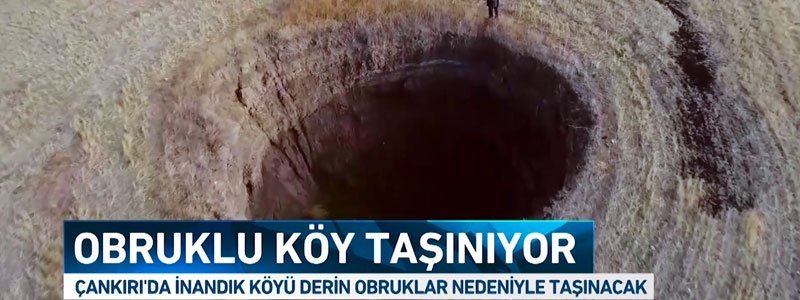
When the danger reaches such serious dimensions, we must discuss the serious effects that the Earth has imposed on us.
We have once again seen how important the issue of water is while it is still shining.Experts state that geological and geophysical survey studies should be conducted to reduce the formation of sinkholes, and risk maps should be created and rated. If there is groundwater usage, it must be controlled, and illegal wells should definitely not be allowed. Permitted wells should also be limited, and after hydrogeological analyses are conducted, the groundwater potential should be examined, and agricultural products that consume less water should be encouraged.In addition to all these measures, wastewater from industrial facilities should be treated in advanced treatment plants and encouraged to be reused in certain processes of these industrial facilities. This will help reduce the industrial extraction of water from underground wells. The use of the latest technologies in agricultural irrigation activities and their limitation is also extremely important.According to reports published by the Konya Water Authority in 2019, it has been stated that 208,306 m3 of treated water was produced in the Konya Wastewater Treatment Plant within a year, enabling the irrigation of an area of approximately 3,366,000 m2. The continuation of these activities should be monitored to ensure that industrial facilities also meet the discharge standards of wastewater treatment plants, thereby alleviating the burden on municipal treatment plants.After the examinations conducted, we see that a sinkhole formed in one area indicates the potential for new sinkholes to form in that area. It is strongly recommended that existing sinkholes should not be closed. Protective measures should be taken to prevent new collapses around the sinkholes. If there are settlements, industrial or transportation facilities in these areas, it is crucial to conduct inspections and, if necessary, relocate them.We can see that humanity is now affected by global warming in the first degree. If sufficient measures are not taken, it has become an inevitable reality that accessing clean water will almost be impossible in the future. Right now, these natural disasters happening just kilometers away from us must not affect us and the generations that follow.We need to limit our personal water usage and raise awareness among everyone about this issue.