Wastewater is not waste; it is an important resource. While the available water resources in the world are rapidly decreasing, the receiving environments, such as seas, lakes, and rivers, are becoming increasingly polluted. Humanity, which creates these problems, must produce solutions that will ensure ecological sustainability for all living beings and for its own future.
Water is the most beautiful gift of nature, let's use it. But let it be of the same quality when we leave it behind. Is it our right as humanity to use water and leave it to nature in a dirty or partially treated state? We share the Earth with all living beings. We should not harm the environmental balance for our temporary economic interests. If we can purify the water we use back to its original state, we should also seriously consider recycling it. I am talking about recovering all wastewater.
We have significant technological capabilities to achieve this. We should conduct more R&D studies to purify it more economically and efficiently. However, even in its current state, we can recover a large portion of it.
Purification of Sea and Ocean Water
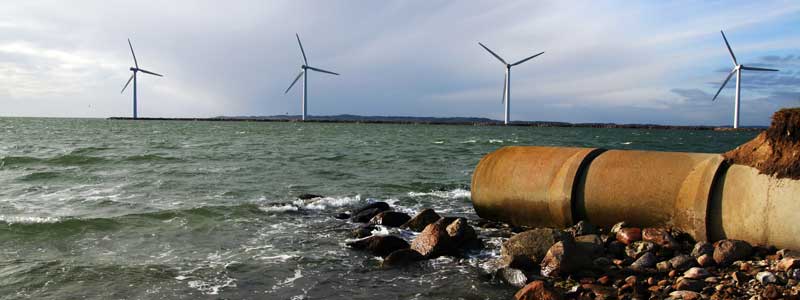
Seawater purification – desalination is already being done in many countries, including ours. We also have studies in this field. It is certain that seas and oceans will continue to be important water sources in the future. However, there are issues that we cannot ignore. Seawater contains dissolved salts such as sodium, sulfate, magnesium, calcium, and bicarbonate, primarily chloride, and separating these from the water is technically challenging. Additionally, we should note that the seas are increasingly polluted with organic and inorganic pollutants. In light of this, we face high initial investment and operational costs in all thermal, ion exchange, or reverse osmosis-based systems. This means that if we do not protect our water resources well from today, we may face very high unit water costs in the future. Since water is the most basic food necessity, the high cost of water leads to increased poverty and paves the way for economic and social devastation, which is inevitable. We should primarily think about what more we can do to protect our water resources. Due to the increasing population and global warming, the amount of usable water per person is decreasing. Of course, global warming is a topic that needs to be addressed on its own. The entire world's people, states, institutions, and organizations must work together to produce solutions to this problem.
They must do their best. However, at the end of the day, this is a fact, a de facto situation before us. We must make all our plans by accepting this real situation. This means that our already limited water resources are decreasing even further.
Technological Applications in Wastewater Treatment
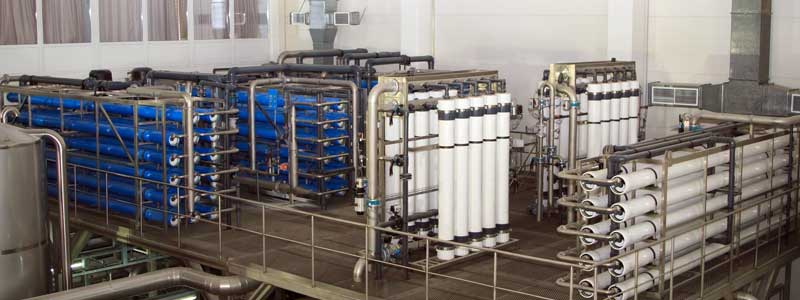
First of all, I must say that these technologies are applied according to the intended use of the reclaimed wastewater. If direct or indirect recovery is involved; more advanced treatment alternatives such as membrane technologies, activated carbon, and advanced oxidation are required. The applications we call membrane filtration include: Microfiltration (MF), Ultrafiltration (UF), Nanofiltration (NF), and Reverse Osmosis (RO), while disinfection and advanced oxidation are also among the highly applicable technologies. For example, if the reclaimed wastewater is to be used for agricultural irrigation, classical activated sludge filtration and chlorination techniques should be used together. However, if it is to be used as industrial process water, techniques such as activated sludge systems, filtration, nanofiltration, ion exchange, and UV can be used together. Of course, the integration and combined use of these treatment technologies also depend on the characterization of the wastewater. However, we can clearly say that filtration technologies are fundamentally indispensable in wastewater recovery.
Wastewater Recovery and Sustainability
In Turkey, 5 billion tons of wastewater are discharged annually. This means the equivalent of three Sapanca lakes or 50 Büyükçekmece lakes worth of water. It is not easy to quantify the monetary value of water as a natural resource or to assess the damage caused by wastewater in nature, but the value of the water we refer to as a commodity is approximately 25-30 billion TL. We discharge this much water every year, it flows away, and we look back at it.
First and foremost, efforts should be made to reduce water consumption in domestic, agricultural, and industrial use. We should do this through three separate branches: awareness-raising, technical studies, and administrative efforts. To reduce water consumption, serious awareness campaigns should start from kindergartens and continue in all schools and throughout the community.It is necessary to carry out awareness-raising. Recently, National Geographic filmed and released a documentary titled "25 Liters," which addresses the issue of water scarcity. We also provided technical contributions. I recommend that those who haven't watched it do so. Such productions are quite important in raising public awareness, and more similar works must be done. Of course, awareness is only part of the job. There is a need for more technical work. More R&D efforts and industry-university collaborations are required. We have ongoing studies in this area, particularly focusing on the treatment of concentrated flows and the recovery of industrial wastewater. Especially, the recovery of industrial wastewater means both the conservation of natural resources and the protection of the environment, as well as the recovery of some valuable and expensive chemicals used in the industry. Point source-based solutions should be considered for the recovery of industrial wastewater. In cases where there are different types of wastewater sources within an industrial facility, separate solutions should be considered for each. Not only the wastewater but also the recovery of valuable raw materials, heat, and energy within the wastewater will provide both environmental and economic benefits. We keep this in mind while preparing our projects. We have experienced that it is beneficial to recover different types of water without mixing them, and we are preparing our projects accordingly.**What Can We Do About Water Recovery?**If we talk about the country as a whole, we need to save, reduce, and recover. Individually, we can all reduce the amount of water we consume. Businesses can first reduce the water they use with the measures they will take, new technologies, and additional facilities, and then recover it. Domestic wastewater can be treated in municipal wastewater treatment plants and then recovered using advanced methods.To achieve this, the rehabilitation and improvement of non-operational treatment plants and their effective operation are necessary. The existing discharge standards for wastewater must be met.After purification according to the criteria, we must move on to the next step for recovery. We should do this gradually. As a starting point, we should aim for a recovery rate of 15-20% and increase this over time to recover all the water. During the process, we must regulate the discharge standards for the receiving environment, laws, regulations, and incentives in favor of the environment so that the gap between recovery and discharge does not widen.Our technology, our comfort of living, transportation, and communication tools are developing rapidly. We live far above the living standards of 30-40 years ago. We must also use these astonishing technological developments for our world and the entire ecosphere. For example, we should consider radically changing our discharge standards from 30-40 years ago. Leaving water back into nature without any alteration or making it reusable is no longer a distant dream; on the contrary, it should be an indispensable goal for the sustainability of human and all living life on Earth. There is a need for bolder and different perspectives and approaches. Technical and administrative studies related to this need to be carried out swiftly.**What is Artemis Purification Doing for Water Recovery?**Artemis Purification has been continuing its studies on wastewater recovery for many years through its R&D activities at its Teknopark office. We consider wastewater not as waste but as a resource, and we know that it is a resource that cannot be replaced by anything else. You can invent and produce every product, but you cannot invent the "water" you need while producing these products. Therefore, we find the work we are doing very valuable and important. We will continue to produce economic solutions to make it more widespread.We are aware of the economic burden on our industrialists. We will continue to develop technology and make it economical to prioritize the issue of wastewater treatment and recovery at the top of the to-do list. Of course, while doing this, we must not neglect other aspects.By minimizing waste, we will ensure the recovery of wastewater. We are a company that conducts various R&D studies, knowing that the concentrated flow resulting from the filtration techniques, which we say is the core technology of recovery, is a waste, and we demonstrate that we do not damage one side while repairing the other. We are developing technologies that provide maximum benefit to the environment from every aspect. In line with this fundamental goal, we will continue our necessary work without losing momentum to integrate various technologies, support them with R&D studies, and make them applicable in the industry.Because we know that protecting our water resources, which are facing depletion, depends on the recovery of wastewater. Thus, we will minimize the likelihood of future generations facing a water scarcity disaster.