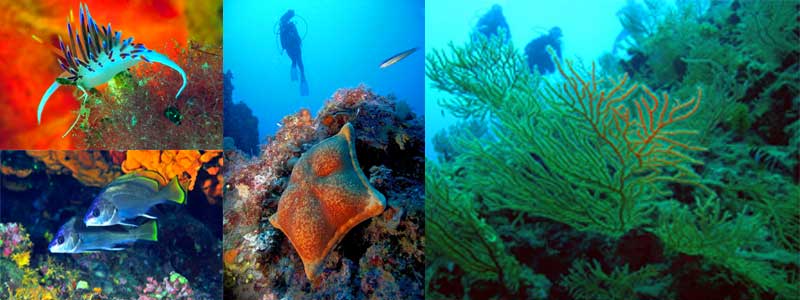
Saros Gulf, one of the few self-cleaning seas in the world, was declared a Special Environmental Protection Area in 2010 in order to preserve its geomorphological, landscape, ecological, floristic, biogenetic, and touristic features without deterioration.
The Saros Bay, located in the northeast of the Aegean Sea, is surrounded by the districts of Gelibolu and Eceabat in Çanakkale province and the districts of Keşan and Enez in Edirne province. Thanks to the lack of industrial development in the area and the absence of large settlements and tourism-related constructions, it has preserved its natural structure until today.Another feature that makes Saros Bay unique and gives it a dynamic structure is its self-cleaning ability through the bottom and surface currents. The currents created by the cold water at the bottom and warm water on the surface, which start on the 15th or 18th day of February, April, and July and end on the 25th or 28th day, clean the bay.**Biodiversity**Saros Bay is also an important area due to its rich biodiversity. The abundant nutrient salts brought by the rivers feeding the bay and the corals, which are indicators of underwater life, play a significant role in enriching biodiversity.In a study conducted in Saros Bay, which is described as a natural aquarium by marine biologists, a total of 941 species were identified, including 6 endemic species in terrestrial and marine areas and 8 new records for our country. The endemic plant species Şehit Karanfili (Dianthus ingoldbyi), which is globally endangered, has been included in the protection and monitoring program by the Ministry of Environment and Urbanization.The region is also quite rich in terrestrial biodiversity, with forested areas consisting of red pine, pure black pine, pure oak, cedar, and beech trees. With its high plant diversity and extensive forested areas, it is also a rich region in terms of wildlife.The bay is an important breeding and wintering area for bird species. The globally endangered little bustard and Siberian goose winter in the area. Among the important bird species that nest in Saroz Bay are the little kestrel, great crested grebe, steppe harrier, and white-tailed eagle.The cılıbıt, marsh sandpiper, long-legged, little grebe, and little tern come.
The cave tunnels of Saros, which attract the interest of divers, are also quite vibrant in terms of biological diversity. In these areas, species such as eel, rooster fish, lipsoz, mığrı, and shrimp can be seen. Inside the dark caves and wrecks, spider crabs, lobsters, and other crab species unique to Saros can be encountered.
The World's First Underwater Archaeology Museum
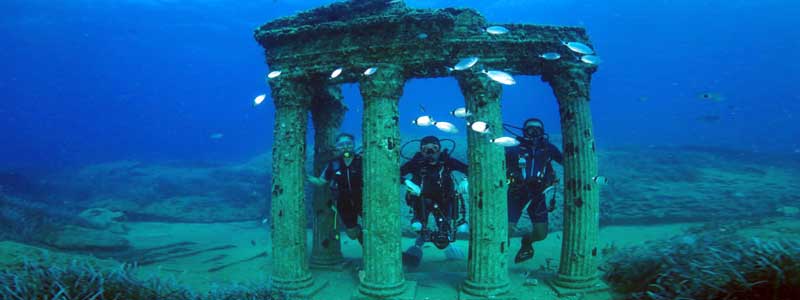
Saros Bay attracts attention not only for its above-water beauty but also for its underwater beauty. Every year, thousands of divers flock to Saros, which has a very colorful underwater life. The shores of Saros Bay, characterized by high cliffs, offer suitable areas for wall diving, which is highly preferred by divers. It is also among the preferred regions for reef diving.
In the 1970s, Captain Cousteau dived in Saros Bay with his famous research vessel Calypso and described it as "the northern version of the Red Sea."
Italian Cove, Uzunkum Beach, Toplar Cape, Bebek and Despot Rocks, Asker Stone, and Minnoş Island in Saros Bay are the most popular diving spots. Bebek Rocks and Minnoş Island are among the top 10 diving spots in Turkey.
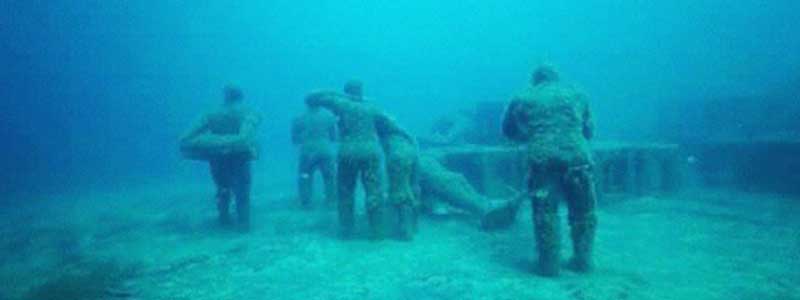
To promote Saros Bay in international diving tourism, the world's first Underwater Archaeology Museum was established as part of the Saros Artificial Reef Project.
In order to convey the visuals of the Gallipoli Campaign to future generations and the world, 400 artificial reefs, including the cannon used by Seyit Onbaşı, were sunk, along with soldier reefs depicting Seyit Onbaşı carrying the wounded ANZAC soldier.
Sources;
https://tvk.csb.gov.tr/saros-korfezi-i-402
http://www.kesan.gov.tr/saros-korfezi
Saros Bay Underwater Documentary, Ministry of Environment and Urbanization, Global Environment Facility, UNDP
https://edirne.csb.gov.tr/edirne-Do you know these about the local martyr carnation? News 255121
https://tvk.csb.gov.tr/saros-korfezi-ozel-cevre-koruma-bolgesi-karasal-ve-denizel-biyocesitlilik-arastirma-projesi-basariyla-tamamlandi-haber-15969
https://www.dogadernegi.org/saros-korfezi/