Air is an absolutely necessary condition for living beings to sustain their lives. Living beings can lose their lives within a few minutes without air. However, having air alone is not sufficient; the presence of clean air is essential and mandatory for both now and the sustainability of life.
Since the Industrial Revolution, the increase in energy consumption has triggered both indirect and direct carbon footprint formation, leading to its rise. The Covid-19 virus, which has become a pandemic and poses a significant threat, has affected people and their living environments, forcing them into certain restrictions.
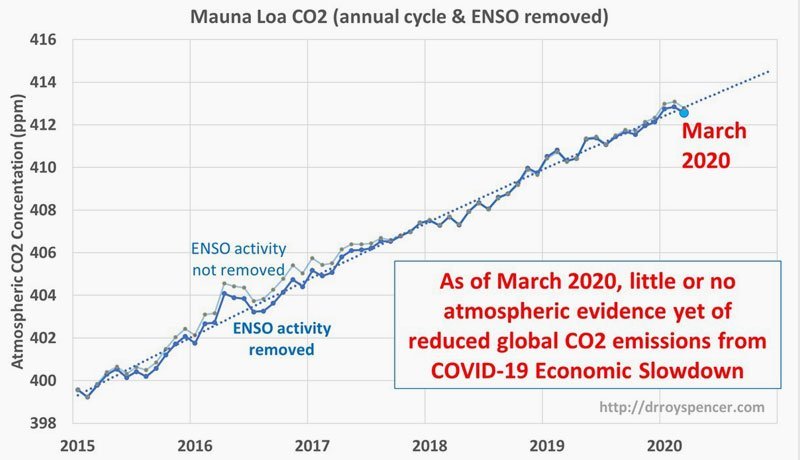
When looking at the measures taken both nationally and internationally, industrial organizations engaged in production are showing visible reductions in carbon footprint formation on a monthly basis under specific measures. The restriction of travel, leading to the cancellation or even prohibition of flights, and the reduction of activities during quarantine days have also resulted in a decrease in carbon emissions from vehicles and similar means of transport.
Covid-19, Greenhouse Gases, and Carbon Footprint

According to IPCC reports from 1992, the main greenhouse gases are CO2, CH4, CFC, N2O, and water vapor (H2O). Anthropogenic activities have been definitively recognized as a source of greenhouse gases by the IPCC following the 6th Climate Conference.
The increase in greenhouse gas emissions has been observed particularly since the Industrial Revolution, that is, since the 1750s. The accumulation of CO2, the most effective greenhouse gas, was about 280 ppm in the pre-industrial era, approximately 291 ppm in 1880, and reached 412 ppm in 2019, marking a 42% increase. Looking at the data from March 2020, it is seen that this value exhibited a decrease. Although this value may not show a significant change over decades, the measures taken on a global scale cannot be overlooked for their effectiveness.
On a global scale, the economic downturns caused by the Covid-19 effect have led to a decrease in greenhouse gas emission values. The partial quarantine periods due to Covid-19 have provided an opportunity for nature to renew itself. Although the Covid-19 virus has negative effects, it has also led to some positive environmental outcomes.
The world is undergoing a renewal process. In this context, improvements in air quality in Istanbul have been observed, indicating a shift from unhealthy levels to sensitive levels, and even from sensitive levels to moderate levels. Although a clear impact of Covid-19 on greenhouse gas data is not seen in the coming months, it has been an effective support in this renewal process.**The Impact of Working from Home on Carbon Footprint**Office buildings' energy consumption, lighting, heating, ventilation, and air conditioning, office supplies, cleaning, etc., have led to a significant reduction in activities that increase carbon footprint. According to an analysis conducted by Carbon Trust, working from home has the potential to save companies $5 billion and 3 million tons of carbon emissions per year by reducing commuting. In this context, although working from home seems to increase the carbon footprint in terms of energy consumption, food, lighting, etc., this value is generally lower compared to the office environment.**Sources:**https://www.greenbiz.com/blog/2014/05/22/will-flexible-working-really-shrink-your-carbon-footprint
http://www.drroyspencer.com/
https://www.havaizleme.gov.tr/
Balta, M. (2020). Reduction of Industry-Related Carbon Footprint. Sakarya University Institute of Science.
Birol, İ. (2019). The Effect Of International Trade On Greenhouse Gas Emission: A Panel Data Analysis. Boğaziçi University The Institute Of Social Sciences.
Şahin, M. T. (2019). Carbon Footprint Applications: A Cement Factory Example. Gebze Technical University Institute of Science.
Birol, İ. (2019). The Effect Of International Trade On Greenhouse Gas Emission: A Panel Data Analysis. Boğaziçi University The Institute Of Social Sciences.