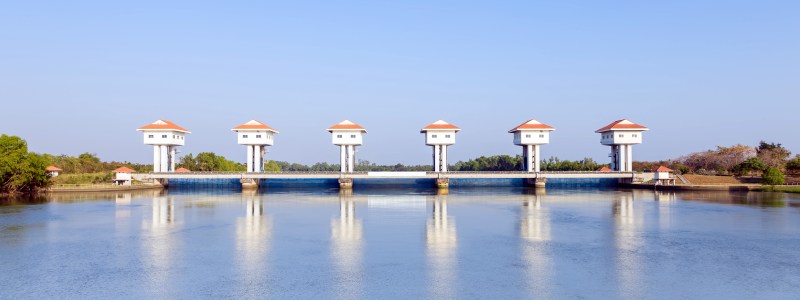
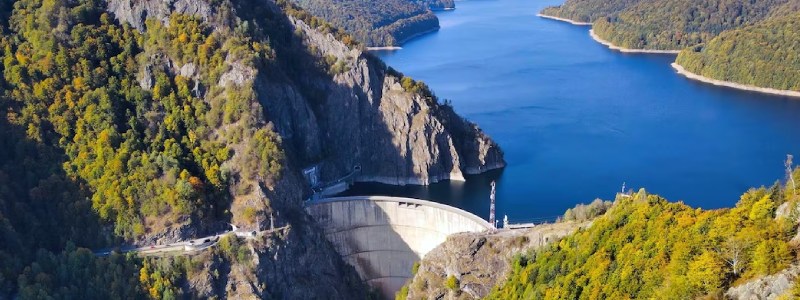
It is estimated that the first dam in the world was built on the Nile River in 4000 BC. The dam, which is 110 meters long and 12 meters high, has been recorded as being used for irrigation and drinking water purposes.
Since the industrial revolution, the increasing population growth and urbanization have led to a gradual reduction of agricultural land, resulting in a rising demand for energy and water. The structures we call "dams" are water structures built since ancient times to meet these needs of humanity. It is estimated that the first dam in the world was built on the Nile River around 4000 BC. The dam, which is 110 meters long and 12 meters high, has been recorded as being used for irrigation and drinking water purposes. Another dam, believed to be one of the oldest in the world, is the Sadd-el-Kafara dam, built between 2950-2750 BC on the Nile River. Building dams is quite a costly and challenging task.Dams serve significant purposes, such as collecting surface water during the rainy season to be used when needed, regularly supplying the necessary water for industry, enabling transportation and fishing due to the creation of lakes by raising water levels, and facilitating agricultural activities. Dam projects, which also support economic policies and are one of the most important sources of energy production in developing countries, not only meet energy needs but also accelerate development from a social and economic perspective.**Energy from Water**With the dams built on rivers, known as Hydroelectric Power Plants, energy can be obtained from flowing water. To simply explain the operation of this system: By blocking the flow of the river to create a dam lake, the height of the water is increased to enhance potential energy. As the water in the reservoirs flows and turns the turbines, electricity is generated through generators connected to these turbines. Approximately 20% of the world's energy is produced in hydroelectric power plants. Although comprehensive studies are required to produce hydroelectric energy, to summarize this mechanism: the carbon emissions into nature from wind and solar energy are...The arrival of hydroelectric energy leads us to define it as a renewable and clean energy source. A mechanism that can convert the power of water into electrical energy is called a Hydroelectric Power Plant (HPP).HPP structures generally consist of; dam body and reservoir, water intake facilities, waterway facilities, power plant facilities, power plant discharge channel, switchyard facilities, bottom outlet, and spillway facilities. Water intake facilities are necessary for transferring water from the dam reservoir or river to the transmission facilities. Waterway facilities are used to convey water to the turbines in facilities such as water transmission channels or tunnels (non-pressurized) or energy tunnels (pressurized) or forced pipes, etc. To store river water, a dam body and reservoir are needed. The purpose of spillways is to ensure that excess water is discharged into the riverbed downstream when the dam reaches maximum water level during heavy rainfall, preventing damage to the dam body; the purpose of bottom outlets is to allow the water from the dam reservoir to be released into the riverbed downstream when necessary.**Environmental Discussion**What does it mean to protect the environment in your opinion? Is it just about not littering, not polluting the seas, and not cutting down trees? Beyond these important points, our need for energy without considering the environment is also proof that we pose a significant danger to the environment. If we can evaluate everything we do from an environmental perspective and breathe easily with a clear conscience as a result, it means we are conscious individuals. While there are benefits to generating energy from Hydroelectric Power Plants, the harms have been a long-standing debate among environmentalists. One of the biggest controversies has been the Alakır Valley. The Alakır Valley is one of the environmental gems that hosts the Alakır River and contains countless flora and fauna. There are 8 HPP projects that are either operational or in the planning stage in this valley. Before the HPP, the Alakır Valley was covered with plane and pine trees; after the HPP, many pine trees were removed by heavy machinery.has been cut off. In addition to the serious impacts on the vegetation and trees around the Alakır River, there has also been an increase in the mortality rates of wildlife in nature. As much as we can develop a country that possesses our natural beauties, we become a respectable citizen to the extent that we protect our environment.You may have heard of "life water." It is the first water after the seedlings meet the soil. While hydroelectric power plant (HPP) projects are implemented, the natural bed of the watercourse is altered, and the living species in this natural flow section are deprived of life water. At this point, life water is necessary for the continuity of the ecosystem, and projects should be realized with the awareness that we need to keep the ecosystem alive.There are two important reports and agreements regarding the relationship between HPPs and the environment. These are the Environmental Impact Assessment (EIA) Report and the Water Use Rights Agreement. Just a few losses that I mentioned make the EIA process mandatory for every HPP project, as well as accelerating the transition to the Strategic Environmental Assessment (SEA) process, which is an approach that ensures the inclusion of social and environmental values in the preparation processes of all plans, programs, and policies beyond the point-based and project-level effects.The purpose of the Water Use Rights Agreement management is to determine the procedures and principles to be applied for the establishment and operation of the HPP project. The Water Use Rights Agreement expresses the procedures and principles regarding the water use of the HPP project, the form of payments to be made to the State Hydraulic Works (DSI), and the agreement between DSI and the company.In summary, it cannot be ignored that the construction of HPPs is inevitable, but since HPPs have very significant effects on nature and living life during the construction and operation phases, which may not be reversible; the extent of the destruction caused by the environmental and social impacts of HPP investments should not exceed the benefits of energy production. HPP investments should ensure that water resources are ecological, protective, and sustainable.
It should be planned and implemented in the project.
What is the Difference Between a Dam and a Hydroelectric Power Plant (HES)?
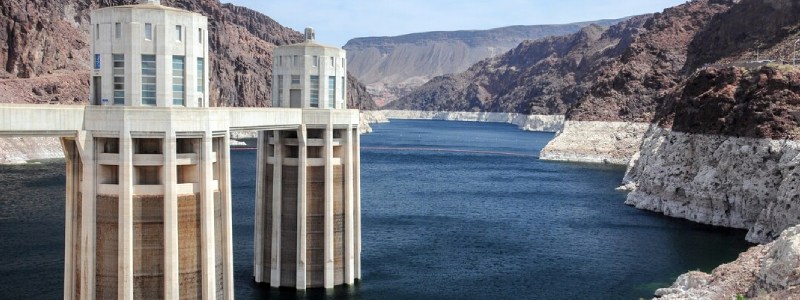
While dams and hydroelectric power plants share common features, we cannot ignore the differences between them.
- In dam structures, the flow of the river is blocked by a structure to create a reservoir, whereas hydroelectric power plants do not have such storage structures like dams.
- Dams serve multiple purposes. They provide services for electricity generation, irrigation water storage, drinking water supply, and flood protection, while hydroelectric power plants are used solely for electricity generation.
- The electricity produced in hydroelectric power plants varies with the seasons. During times of high rainfall and flow, electricity production increases, while in dry seasons, hydroelectric power plants may produce no electricity at all. However, since it is possible to regulate the flow rate in dams, electricity production can still occur even in dry, rainless seasons.
Since hydroelectric energy is a renewable energy source, it does not emit greenhouse gases into the atmosphere and has the characteristic of continuously renewing itself. In these years when we increasingly need clean air, there is another valid reason for us to live in harmony with renewable energy sources! However, like all human-made structures built in nature, dams have both advantages and disadvantages. The dams built to obtain hydroelectric energy not only trap the sediments brought by rivers and cause a decrease in agricultural productivity but also pose a significant threat to the living beings and historical artifacts in that area. The construction costs are very high, but since the main source of production is water, the production costs are quite low.
When Did We Encounter This Energy?
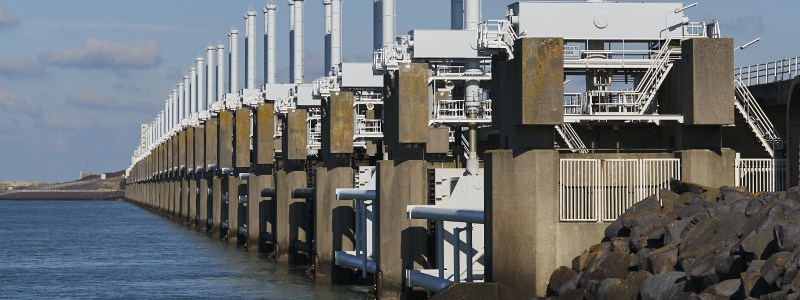
In October 1881, the world's first hydroelectric power plant, known as the "Central Power Station," was established on the River Wey in the town of Godalming, located southwest of London, by two operators, and electricity...It was produced. In fact, the first customer of the power plant was the Godalming Municipality. However, the conditions at that time (the fragility of bulbs designed for street lighting using electric energy and the public's reluctance to give up cheap products like gas lamps) led to the cessation of electricity production at the plant in a short time. Nevertheless, this courageous first step played a significant role in the importance of hydroelectric energy today and encouraged initiatives in the following years. In our country, hydroelectric power plants began to be established by state and private enterprises starting from 1902. It is known that Sultan Abdulhamid II established our first plant in Mersin/Tarsus. The first plant in the history of the Republic started production in 1929 in the Işıklar district of Trabzon.