The water footprint is an indicator that shows the amount of water consumed directly or indirectly in production and consumption processes.
The water footprint is measured by the amount of water consumed and polluted over a specific time period.
The concept of the water footprint is an alternative indicator for expressing water consumption. It differs from traditional statistics in that it accounts not only for the amount of water withdrawn from water sources but also for the amount of water consumed indirectly and the amount of water polluted.
The concept of "Water Footprint" was first introduced in 2002 by Arjen Hoekstra at UNESCO-IHE. (1 UNESCO-IHE Institute for Water Education is the largest organization in the world providing postgraduate education in water, located in Delft, Netherlands. http://www.unesco-ihe.org)
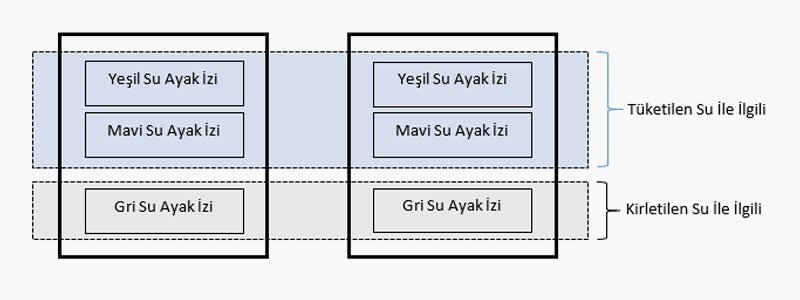
The water footprint is examined with three separate components representing water use and quality.
Blue Water Footprint

Blue water consumption refers to the amount of clean water consumed; it indicates the quantity of surface and groundwater. These sources are particularly used in calculations of industrial, domestic, and agricultural water consumption.
Green Water Footprint
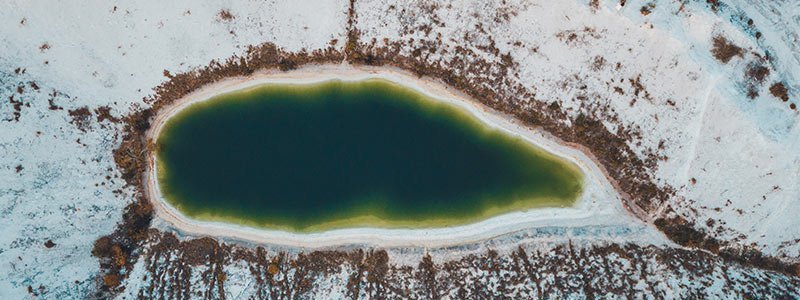
Green water consumption refers to the amount of precipitation that does not mix with groundwater or surface waters. In other words, it indicates the amount of water that evaporates and is taken up by plants. These sources are particularly used in calculations of horticulture, forestry, and agricultural water consumption.
Grey Water Footprint
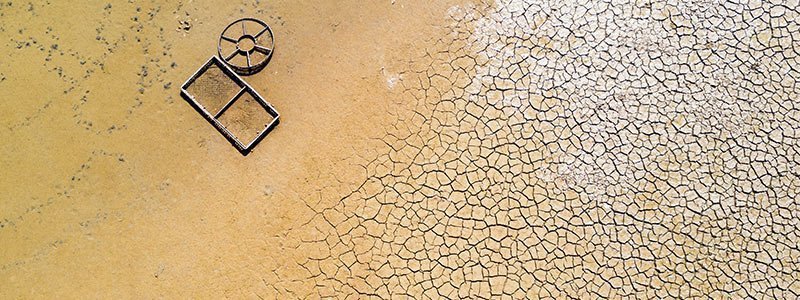
Grey water is an indicator of water pollution in a specific part of the process. It is included in calculations as the volume of clean water required to bring the polluted water up to the standards of the receiving environment.
Water Footprint Assessment

The aim of water footprint assessment studies is to analyze the relationship between human activities or the production of specific products and water pollution and water scarcity, and to ensure that these activities and products become more sustainable from a water perspective.
When conducting a water footprint assessment;
The activity for which the water footprint calculation will be made and the boundaries of the activity are determined
A process, product, producer, or consumer's water footprint, or the water footprint of a specific geographical area, is calculated. The environmental, social, and economic sustainability of the water footprint is assessed. A strategy is developed based on the calculation results.Water footprint studies can be conducted for various reasons and in different contexts. The calculation and assessment of the water footprint can be done specifically for any of the areas mentioned below.- The water footprint of a process step
- The water footprint of a product
- The water footprint of a consumer or a group of consumers
- The water footprint in a geographically defined area
- The water footprint of a business
- The water footprint of an industry sector
- The water footprint of humanity as a wholeThe water footprint assessment study can be conducted using any or all of the components of blue water footprint, green water footprint, and grey water footprint. Particularly in calculating indirect water consumption, it is determined where in the supply chain the analysis will be cut off. It is decided which period of consumption and pollution data will be used.In water footprint calculations, data is generally expressed in m3/year.In blue water consumption, the amount of surface water and groundwater used for the defined scope of activity is determined.Green water consumption refers to the total volume of rainwater used directly or indirectly in the production process of a product or service, so the consumption of green water resources is particularly used in agricultural, horticultural, and forestry activities.When calculating the grey water footprint, the wastewater discharge of the defined scope of activity is taken into account. That is, the amount of clean water required for dilution when the discharged wastewater is intended to meet the standards of the receiving environment from which the consumed water was taken is included in the calculation.In blue water and green water footprints, water consumption is calculated, while in grey water footprint, a consumption calculation is made based on the pollution generated.
3. Water Footprint Sustainability Assessment
In the quantitative assessment of the calculated water footprint, since water footprint calculations are generally made in m3/year, the calculated water footprint can be compared to the volume of existing freshwater resources.
The basis of the water footprint assessment is the comparison of the calculated water footprint amount for the current situation against the amount of water that the world can sustainably provide.
The calculation results are evaluated from environmental, social, and economic sustainability perspectives.
4. Developing a Water Footprint Strategy
It is possible for businesses to reduce their water footprint by decreasing the amount of water they consume during their operations and by reducing the amount of wastewater they discharge and the pollution load to a near-zero point.
For many businesses, reducing the water footprint within their own operations is easier than intervening in the supply chain. However, it can be observed that quantitatively reducing the water footprint in the supply chain is more effective than a reduction in operations. In such cases, guiding suppliers in calculating and reducing their water footprint, prioritizing the concept of water footprint in supplier agreements and selections, and setting standards will be effective.
The Impact of Wastewater Treatment and Recovery on Reducing Water Footprint
The grey water footprint is related to the pollution load of the discharged wastewater, not the pollution load of the wastewater generated in the process. Treating wastewater before discharge or treating it beyond the standards required by the legal authority will directly affect the reduction of the grey water footprint, as it will reduce the pollution load in the discharged water. The grey water footprint will be reduced to zero if the parameters of the discharged wastewater are brought below or to the raw water standards.
When wastewater is reused within the operation or treated and recovered for different purposes within the facility, it will have an impact on the receiving environment.When not discharged, the grey water footprint will also be reset.
The blue water and green water footprints can also be reduced to zero through wastewater recovery methods. In a completely closed system, water losses due to evaporation or wastewater discharge can be prevented.
In factories or cooling systems, the amount of water that will evaporate can be captured, recovered, and returned to the receiving environment.
The only point where water consumption cannot be reduced to zero is when water is used in the product itself and due to evaporation from open areas.
Source;
The Water Footprint Assessment Manual (Water Footprint Network, 2012)
