What is a Port Waste Reception Facility?
What are Ship Wastes?
What is Sludge?
What is Bilge Water?
Waste Reception Facility Project Report and Waste Management Plan
Bilge Water Dehydration and Wastewater Treatment
What Types of Waste are Collected from Ships?
What is a Waste Acceptance Facility?
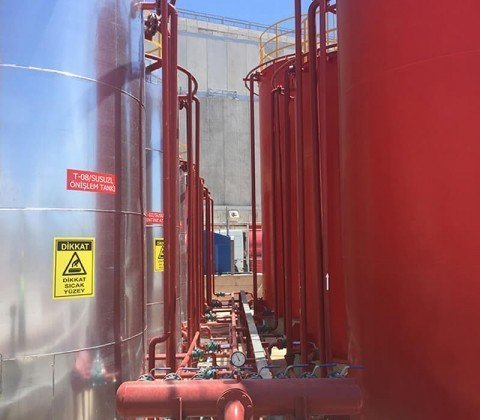
Ports are required to establish waste acceptance facilities to receive waste generated by ships (sludge, bilge water, waste oil, garbage, domestic wastewater) and cargo residues. The waste produced by ships includes all waste and cargo residues that fall under Annex I, Annex IV, and Annex V of MARPOL 73/78, including sewage. Ports can collect this waste from ships docking at the port or from waste collection vessels operating in the area. Ports are responsible for establishing waste acceptance facilities with varying capacities and technical equipment based on the size of the port, the type of the ship docking, the duration of the voyage, and the number of ships. The general responsibilities of ports in the establishment and operation of waste acceptance facilities are as follows:
- Ports design the waste acceptance facility according to MARPOL 73/78 and submit the facility project report for approval to the Ministry of Environment and Urbanization.
- Installation work for the waste acceptance facility begins based on the approved project, and after the installation is completed, the facility is inspected by the Ministry of Environment and Urbanization; if found suitable, a Waste Acceptance Facility approval certificate is issued,
- They dispose of the waste collected at the waste acceptance facility in accordance with Environmental Legislation or send it to other facilities licensed by the Ministry of Environment and Urbanization for disposal,
- They also accept waste carried by the waste collection vessels with which they have contracts,
- They ensure communication with official institutions during the waste collection process, filling out necessary documents and forms and submitting them to the Provincial Directorates of Environment and Urbanization,
- They submit the waste management plan to the Ministry of Environment and Urbanization every three years.
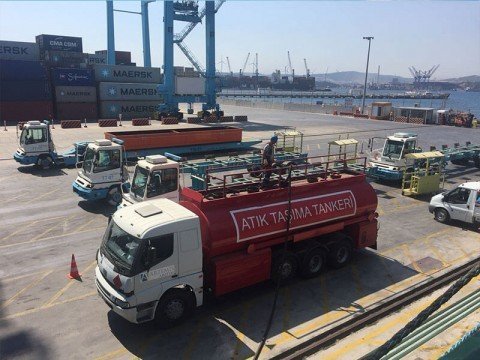
Our Waste Acceptance Facility Services
Project Design and Project Approval Process
We design waste reception facilities in accordance with existing port conditions and the requirements of MARPOL 73/78, and manage the process of submitting the project to the Ministry of Environment and Urbanization for approval. Additionally, we provide services for the installation of the waste reception facility in line with the approved project and for obtaining the waste reception facility approval certificate.
Facility Installation
We provide services for the installation of the project within the port area, the procurement of all machinery and equipment, and the commissioning of the waste reception facility following the completion of all required testing.
 Facility Operation
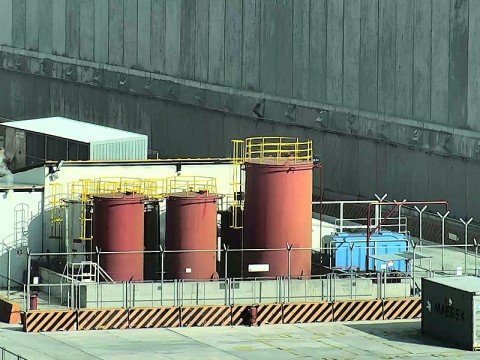
According to the Regulation on the Reception of Waste from Ships and Control of Waste, waste reception facilities can be established individually or jointly by ports and may also be operated by third parties.
Within this framework, we provide comprehensive services including full management of the waste reception facility, operation of the plant, personnel supply, and the fulfillment of all legal requirements.
At waste reception facilities, ship-generated waste must be properly received, separated, classified, stored in appropriate tanks, and dewatered in accordance with the requirements set by the Ministry.
In particular, the efficient and correct operation of separators used in the dewatering process requires technical expertise. In addition, domestic wastewater collected from ships and industrial wastewater generated after dewatering must be treated in compliance with the standards of the Water Pollution Control Regulation before being discharged into the receiving environment. Artemis Arıtım has been leading the sector for years with its experienced teams in this field.
Waste Acceptance Facility
What is a Port Waste Reception Facility?
The International Maritime Organization (IMO) recognized the critical importance of waste reception facilities for the proper implementation of MARPOL 73/78. Through the Marine Environment Protection Committee (MEPC), member states have been encouraged to establish adequate and efficient waste reception facilities.
In line with MARPOL, the Directive 2000/59/EC mandates that international ports must have waste reception facilities capable of effectively meeting the needs of the ships they serve and providing efficient solutions.
Various types of waste are generated on ships under operational conditions, including oily waste, sludge (fuel residues), bilge water, domestic wastewater, garbage, and cargo residues. The quantity of waste generated depends on several factors such as crew size, vessel dimensions, voyage duration, type of fuel used, and other operational parameters. Additionally, the onboard waste management system plays a significant role in determining the volume of waste produced.
The discharge of such waste into the sea leads to serious environmental problems, the impacts of which are well documented. Waste reception facilities are licensed installations where ship-generated waste is collected, separated in accordance with relevant regulations, temporarily stored, and then sent to authorized organizations for disposal or recovery. These facilities also include wastewater treatment processes.
As Artemis Arıtım, we design, engineer, and construct optimum waste reception facilities tailored for effective operation, supported by our expert team and field experience. Upon request, we also provide operational services with our qualified personnel.
What Are Ship-Generated Wastes?
Waste originating from ships is classified under six annexes of MARPOL 73/78 based on the type of marine pollution they may cause.
Under Annex I, petroleum-based wastes are regulated; Annex II covers noxious liquid substances carried in bulk; Annex III includes harmful substances transported in packaged form; Annex IV addresses sewage (domestic wastewater); Annex V covers solid wastes in various fractions; and Annex VI includes emissions that contribute to air pollution.
In general, the wastes most frequently delivered to reception facilities fall under Annex I and Annex V.
From a composition perspective, for solid waste reception facilities, the most commonly accepted fractions include plastics, food waste, domestic waste, operational waste, and cooking oil.
Depending on the type of vessels served by the port, Annex I wastes typically include bilge water, sludge, slop, and waste oils. Among these, sludge and bilge water are the most commonly received waste streams, depending on the vessel’s route and type of operation.
What is Sludge?
Sludge generated on ships can generally be defined as a residue consisting of a mixture of water, solid particles, and high-viscosity oil remaining after any oil separation process.
The sources of sludge include main engine or auxiliary engine lubricating oil separators, fuel oil separators, bilge water separators, oil filtration equipment, as well as drip trays and collection pans.
What is Bilge Water?
Bilge water is an aqueous mixture containing oily liquids, lubricants, hydraulic oil, grease, surfactants, and other liquid wastes. It refers to the accumulation of this waste mixture at the lowest point of a ship.
It may originate from the main engine, auxiliary engines, propulsion components, as well as various pipes and equipment located in the engine room.
In accordance with criteria defined under MARPOL 73/78, bilge water that has been physically separated onboard and contains oil content below 15 ppm (or 5 ppm in Canada) may be discharged outside special areas. Alternatively, it can be stored in a bilge tank and later transferred to a waste reception facility.
Waste Reception Facility Project Report and Waste Management Plan
Before the establishment of a waste reception facility, a project report is prepared. This report also includes the Waste Management Plan.
The report covers the types of vessels the port will serve, the expected types of waste to be received, and capacity calculations based on this information. It must be renewed every three years.
With our expert team and field experience, we also support our clients during the preparation phase.
Bilge Water Dewatering and Wastewater Treatment
Bilge water and sludge collected from ships contain a significant amount of water. Within the facility, bilge water is first stored in tanks where free water is separated.
It is then processed through a separator, where water is physically separated from the waste stream. The separated water is subsequently treated in an industrial wastewater treatment unit, and only after meeting the required standards is it discharged into the receiving environment.
What Are the Types of Waste Collected from Ships?
The pollution of marine waters caused by ships is a significant global concern. Various types of waste accumulated on board or generated due to ship operations must be processed by waste reception facilities, particularly in international ports, in accordance with the MARPOL 73/78 protocol.
So, what is MARPOL? MARPOL, formally known as the “International Convention for the Prevention of Pollution from Ships,” was signed in 1973. Through its provisions, sustainable environmental protection is promoted by requiring licensed waste reception facilities in environmentally sensitive maritime areas.
What is Bilge Water?
Depending on the ship type and route, one of the waste types generated onboard is bilge water. It can be defined as the accumulation found at the lowest part of the ship where the engine room and boiler systems are located. In other words, all wastewater and drainage from the vessel is collected in this area known as the bilge.
When ships arrive at port, bilge water and other ship-generated wastes are transferred to tanks via barges or collection vessels. During this process, bilge water is treated using wastewater treatment systems, cleaned, and then discharged back into the sea in compliance with environmental standards.
What is Slop?
Slop refers to oily wastewater accumulated in a ship’s cargo tanks. It is often also associated with sludge-like waste. This petroleum-based residue, particularly formed in fuel tanks, is considered highly polluting for marine environments.
Slop typically consists of sediment or oil residues in a semi-solid, muddy form. Since it is generated during normal ship operations, it is one of the critical waste streams that must be carefully managed and properly handled to prevent marine pollution.
What is an Industrial Waste Management Plan?
The industrial waste management plan prepared by businesses that produce both hazardous and non-hazardous waste is determined by the Ministry of Environment and Urbanization. The implementation of all plans related to the environment and waste, aimed at protecting nature and passing it on to the future, is extremely serious. Generally, the plan, prepared for a duration of three years, must be processed according to waste codes. If industrial wastes are not controlled, they can mix with groundwater and threaten life. How to prepare an industrial waste management plan for ships:
With the awareness of environmental issues, reducing and controlling pollution in the marine environment has become a common problem not only for our country but for the entire world. Therefore, it is essential to take all necessary measures within the scope of the waste plan.
What is a Waste Acceptance Facility and What Does It Do?
Waste acceptance facilities designed to prevent pollution in seas and oceans exist to protect the rest of the world. Waste dumped into seawater, such as toxic waste or oil spills, is protected by international agreements due to its global concern. Waste acceptance facilities designed to prevent the discharge of these toxic ship wastes into the sea without complying with protocols or accidental spills also help to prevent many diseases that threaten human health.It is essential.
In our age, where saving and recycling are quite important, a waste facility is necessary for both household and industrial waste to create a sustainable environment. The Waste Acceptance Facility activity report prepared by an authorized environmental management unit is evaluated according to certain formats. In accordance with the zero waste management plan established within the framework of environmental law, the efficient use of water resources and the aim of not disrupting the ecological balance are meticulously monitored.
With an expert team and an experienced field crew, Artemis Treatment designs, projects, and carries out the installation of optimal facilities that can serve you in the best way possible. If requested, it can also be responsible for the operation of this facility. You can contact us for all your treatment needs and benefit from the experiences of our experts.